
“The devil I know is the building I’m in.” That’s what Cassie Rosenthal told herself after years of waffling between selling the Greenwich Village apartment she’d lived in for decades or staying put. She’d kept a close eye on the Manhattan real estate market while circling the idea of renovating.
Eventually, the answer revealed itself to the born-and-raised New Yorker and her husband, Paul: Stay, but take it down to the studs. “We love the space, we love the building, we love the neighborhood,” Cassie says. “This is home.”
And it wasn’t a new home either. Cassie first moved into the building in 2003, when some buyers were skittish about investing in New York, making Greenwich Village living within reach. Working in Chelsea art galleries, Cassie longed for a shorter commute, and there was a full-circle appeal about moving to the neighborhood where her parents had lived early in their relationship. At the time, 13th Street was closed for PATH train construction, so scaffolding swallowed the building, and the block looked, she recalls, “like a war zone.” Then she stepped inside.
Cassie immediately fell for the soaring ceilings and abundant natural light. Five years later, during another dip in the market, a two-bedroom apartment opened up down the hall with south-facing windows and nothing across the street to block the sun. She fell in love again, even harder this time.
The building itself, constructed in 1906 as the original Macy’s department store before its conversion into condominiums nearly a century later, boasted history. The apartments, however, emerged from that renovation as blank canvases—no architectural detailing and little distinction between one space and the next.
For years, Cassie postponed renovating, convinced she would eventually move instead. The apartment lacked storage and years of work throughout other units had made the walls increasingly permeable to hallway and neighboring noise. Instead of packing up to another address though, she finally decided to invest in the one she already loved. “It was basically an open white loft,” Cassie says. “As Nate would say, there were no ‘moments.’ Your eye went everywhere all at once.”
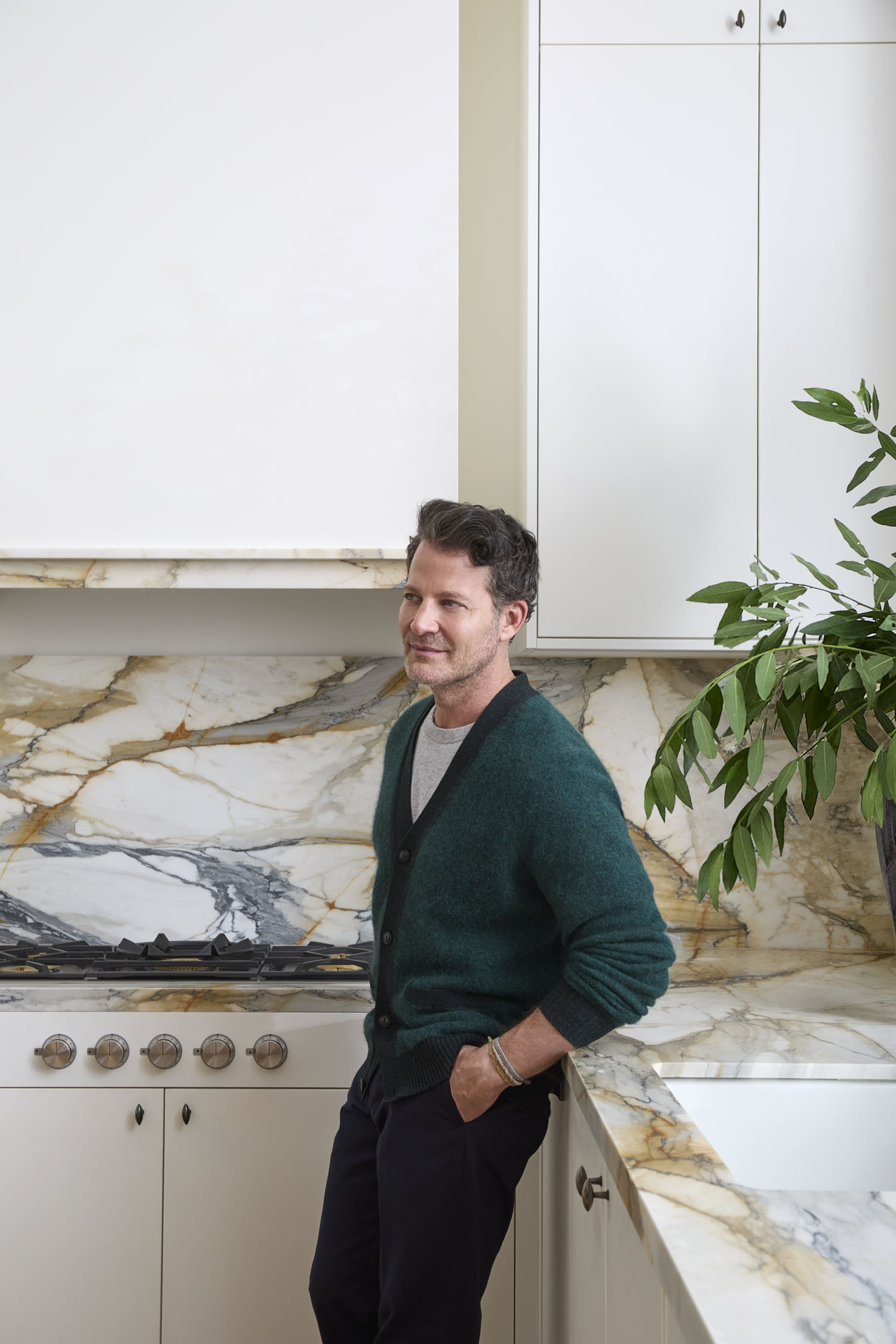
That Nate is, of course, Nate Berkus—the internationally renowned designer whose projects span the globe, but whose office sits just a few blocks from Cassie’s apartment. She’d spotted him around the neighborhood over the years and knew he was working on another residence nearby. “I thought, I’m making this big decision to renovate. I want a designer who can transform this apartment into the forever apartment I know it can be,” Cassie says. Filling out the inquiry form on his website felt like a long shot, so she was surprised to hear back quickly. “I obsessed about it for a very long time,” she says, “and then suddenly, Nate was in my apartment.”
Instead of a vague wish list, Cassie came armed to their first meeting with a fully realized point of view—Parisian in spirit, mid-century in its bones, layered with vintage lighting and, most importantly, an art collection she’d spent decades building. “I needed a really good quarterback to bring that vision to life,” she says.
To Nate, the project wasn’t simply about redesigning an apartment, but honoring lives that had unfolded there over two decades. “There was something really romantic to me about the idea that somebody would evolve while greeting the same doorman every morning and knowing the building engineers on a first-name basis,” Nate says. “They knew every detail of what was great about living there.”
And just as importantly, they knew everything that wasn’t so great. “These are two smart, professional New Yorkers who have a very strong sense of self,” Nate says. “They know what a Sunday afternoon looks like for them as a couple and what a Monday morning feels like when they’re getting dressed.”
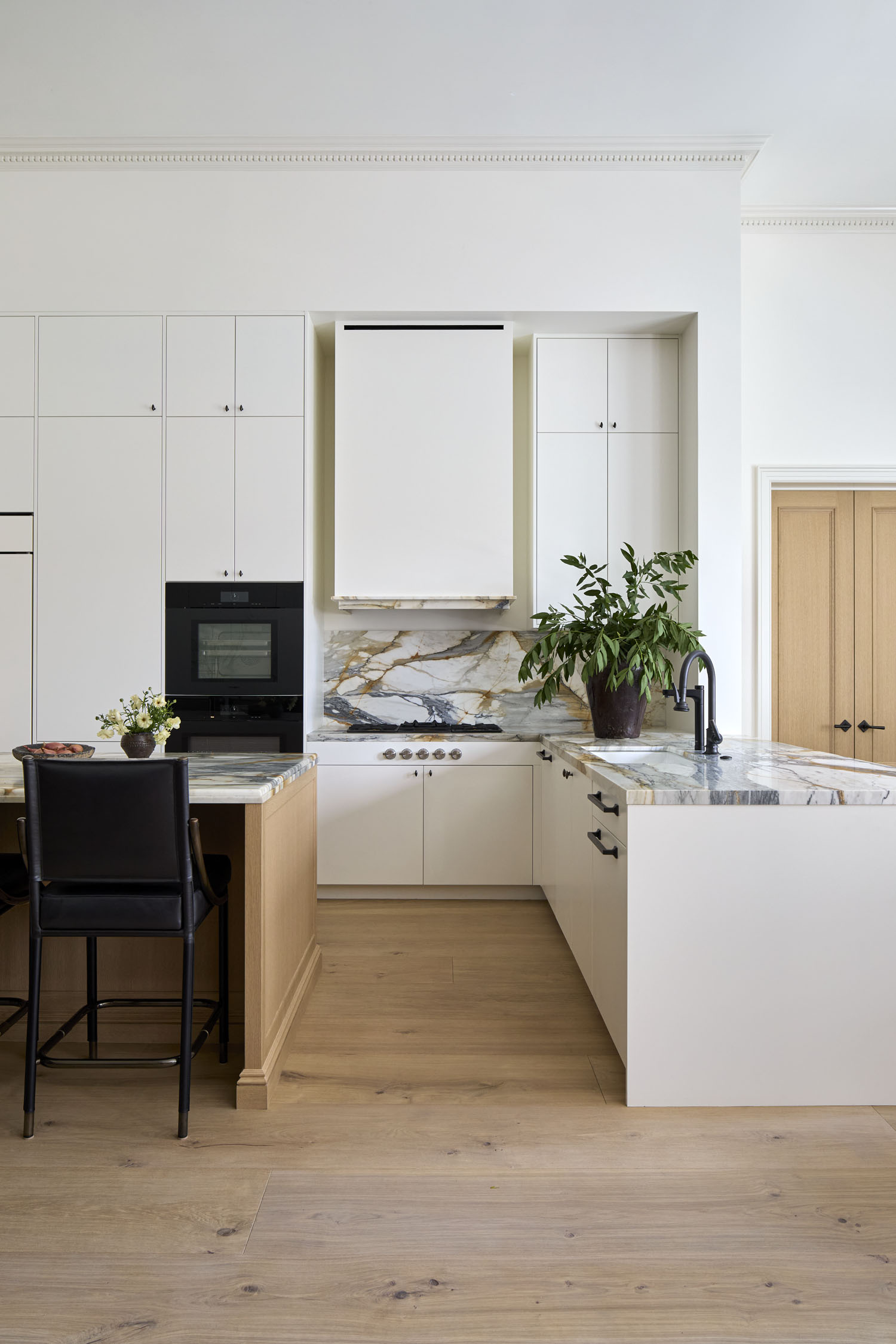
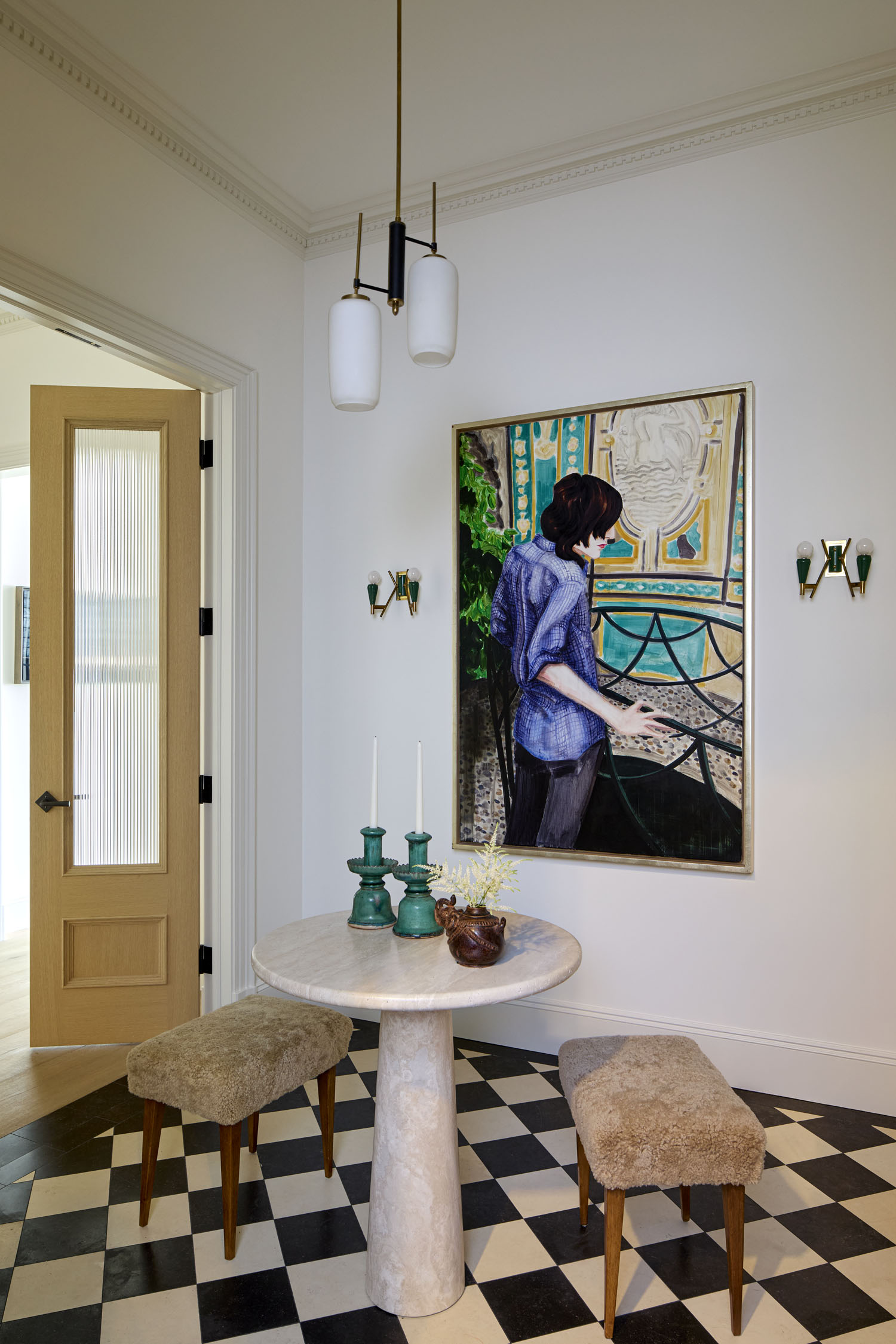
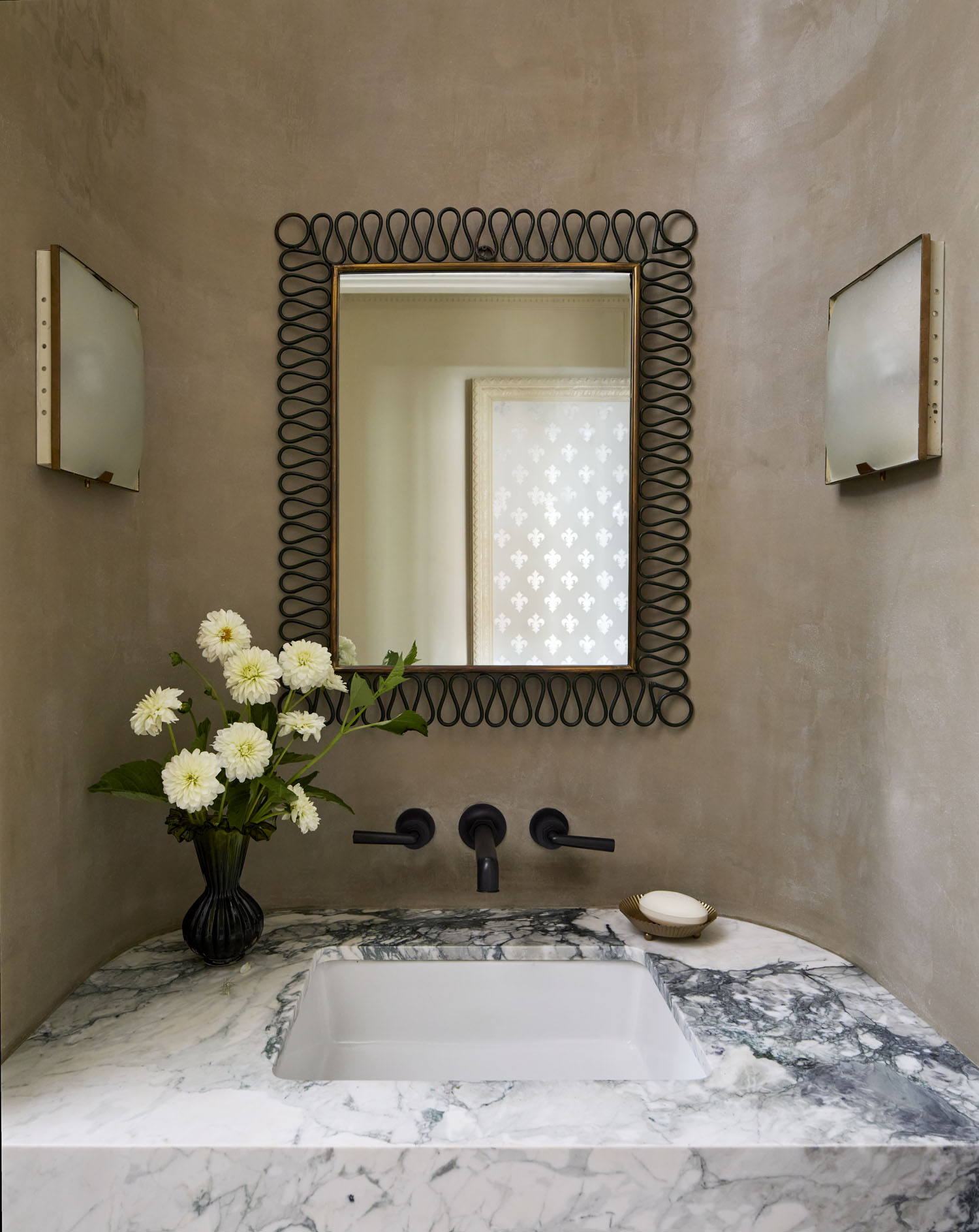
Cassie longed for the apartment to stop feeling like a loft, and more like a townhouse, with ample storage, a sense of arrival, and elements of surprise. To Nate, that translated into dentil molding, handmade doors that could have been hung in 1902, and hardware worth noticing. Alongside senior designer Rian Smith, the team carved out a pantry, coffee bar, wet bar, office, and an astonishing amount of hidden storage into the existing footprint—more, Nate says, than he’s ever fit into a New York apartment.
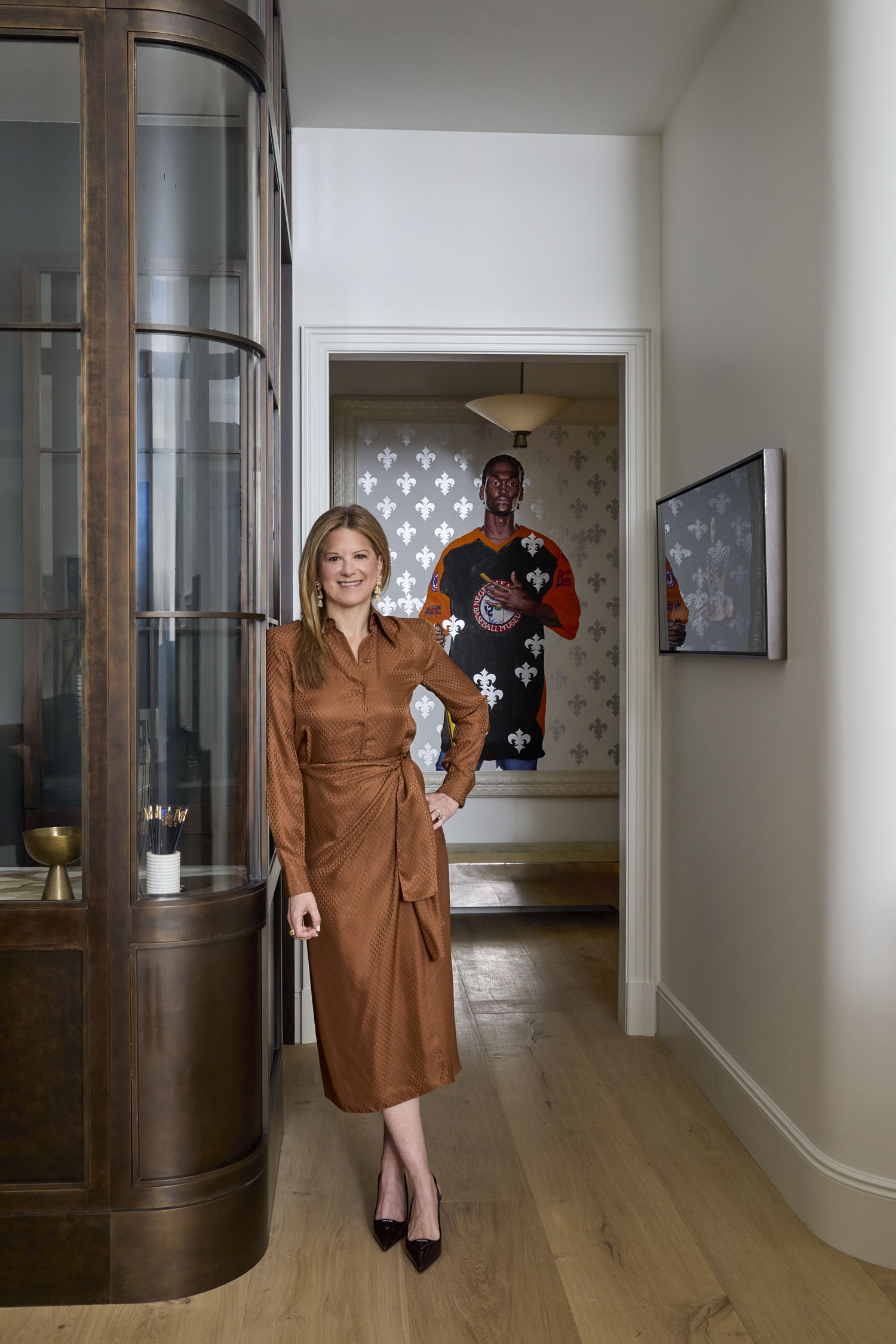
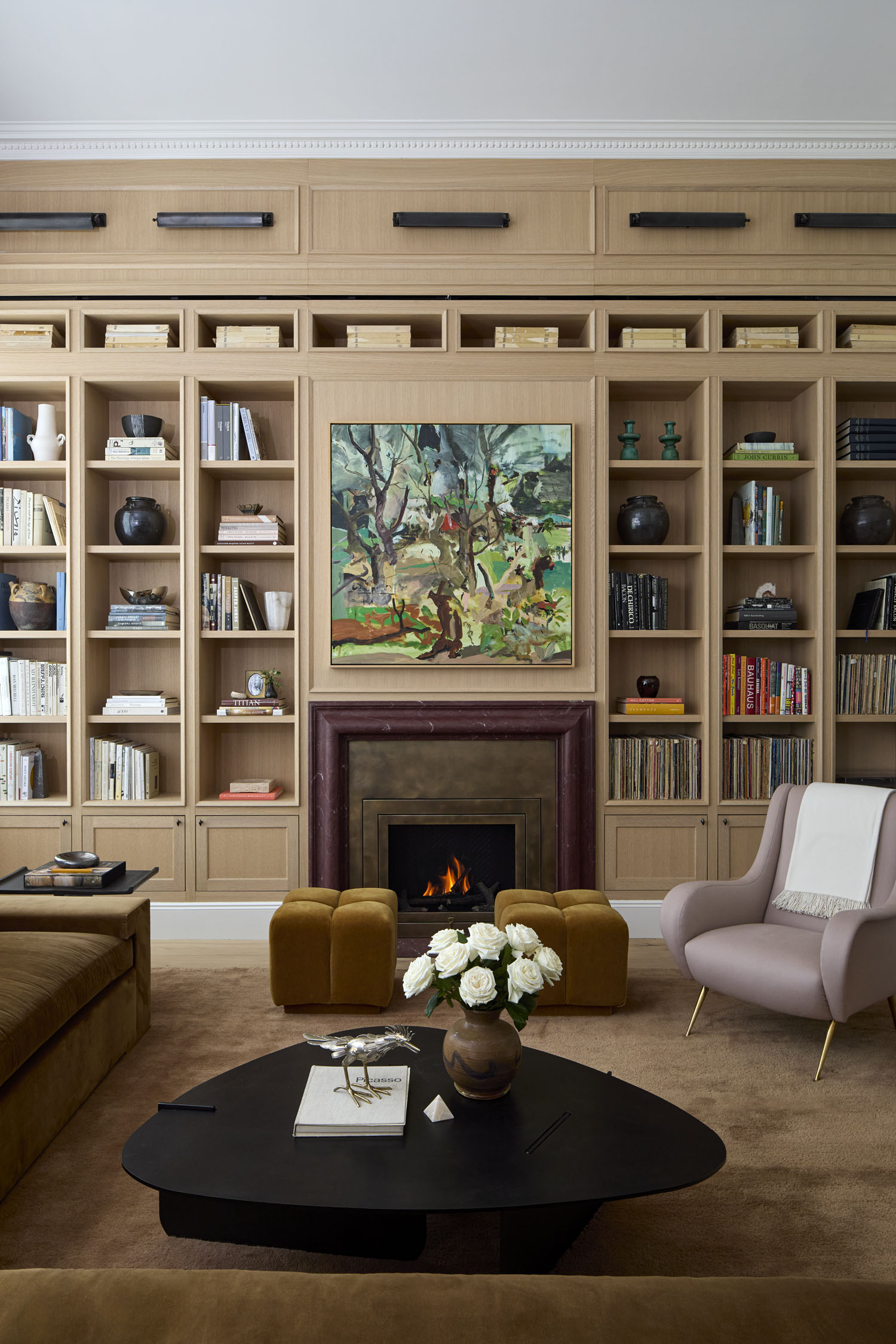
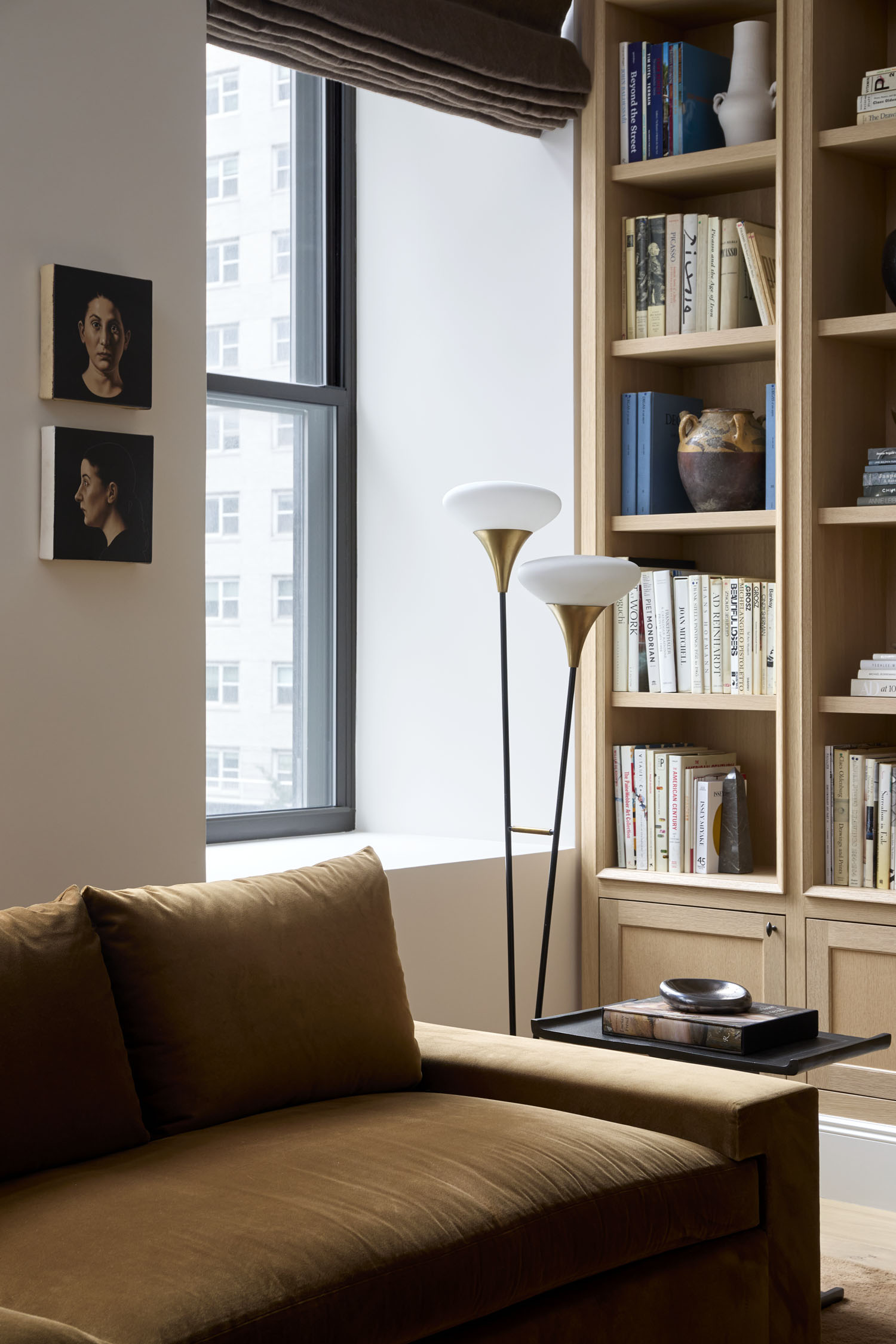
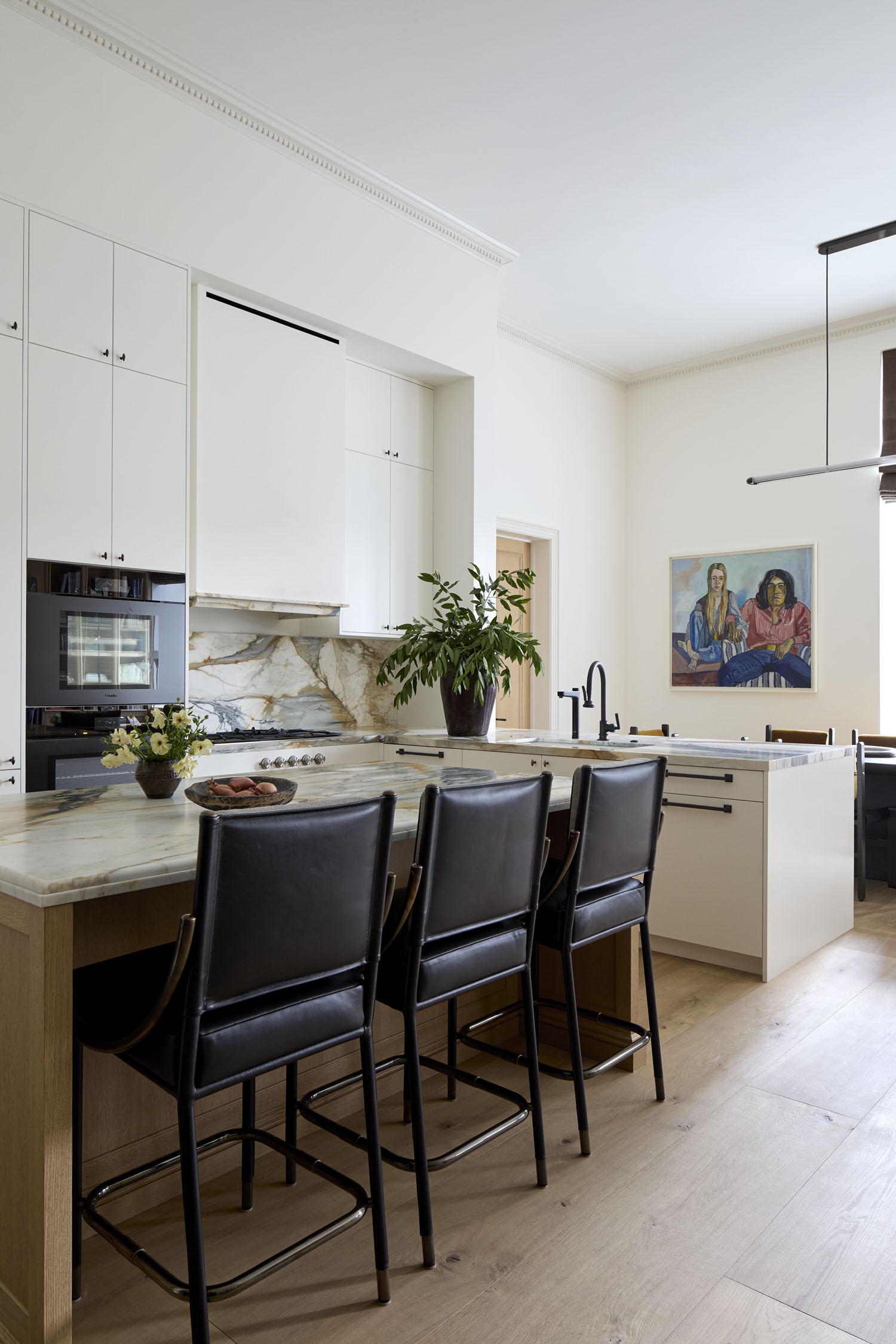
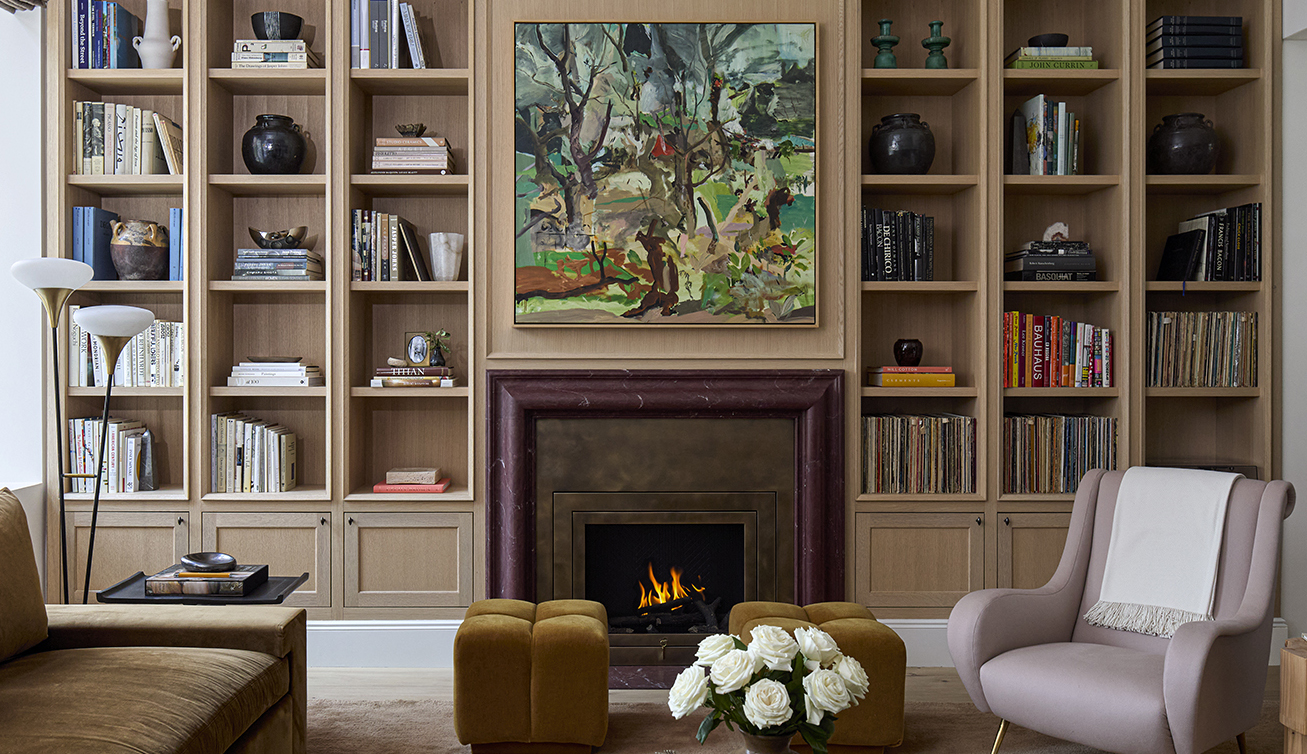
A defined entry sequence now buffers the apartment from hallway noise behind rippled glass doors. The kitchen gained a generous island and clever storage, including a sliver-thin spice cabinet tucked into what had been unusable space. The living room now revolves around a fireplace framed by oak millwork; the built-in displays beloved books as well as Paul’s father’s record collection. One of the renovation’s most striking additions is a curved bronze-and-glass office that introduces a sculptural focal point visible from nearly every room.
No feature, though, upstages the art. Cassie grew up on Museum Mile, majored in art history, and spent nearly a quarter century building her parents’ remarkable collection piece by piece. She negotiated acquisitions, bid at auction, and cultivated relationships with artists.
When her mother offered to let Cassie choose works for the renovated apartment, it came with a humble request: Reorganize the collection that remained. Cassie happily obliged. “I was like a kid in a candy store,” she says. “It was so hard not to take everything, put it on my back, and walk out the door.”
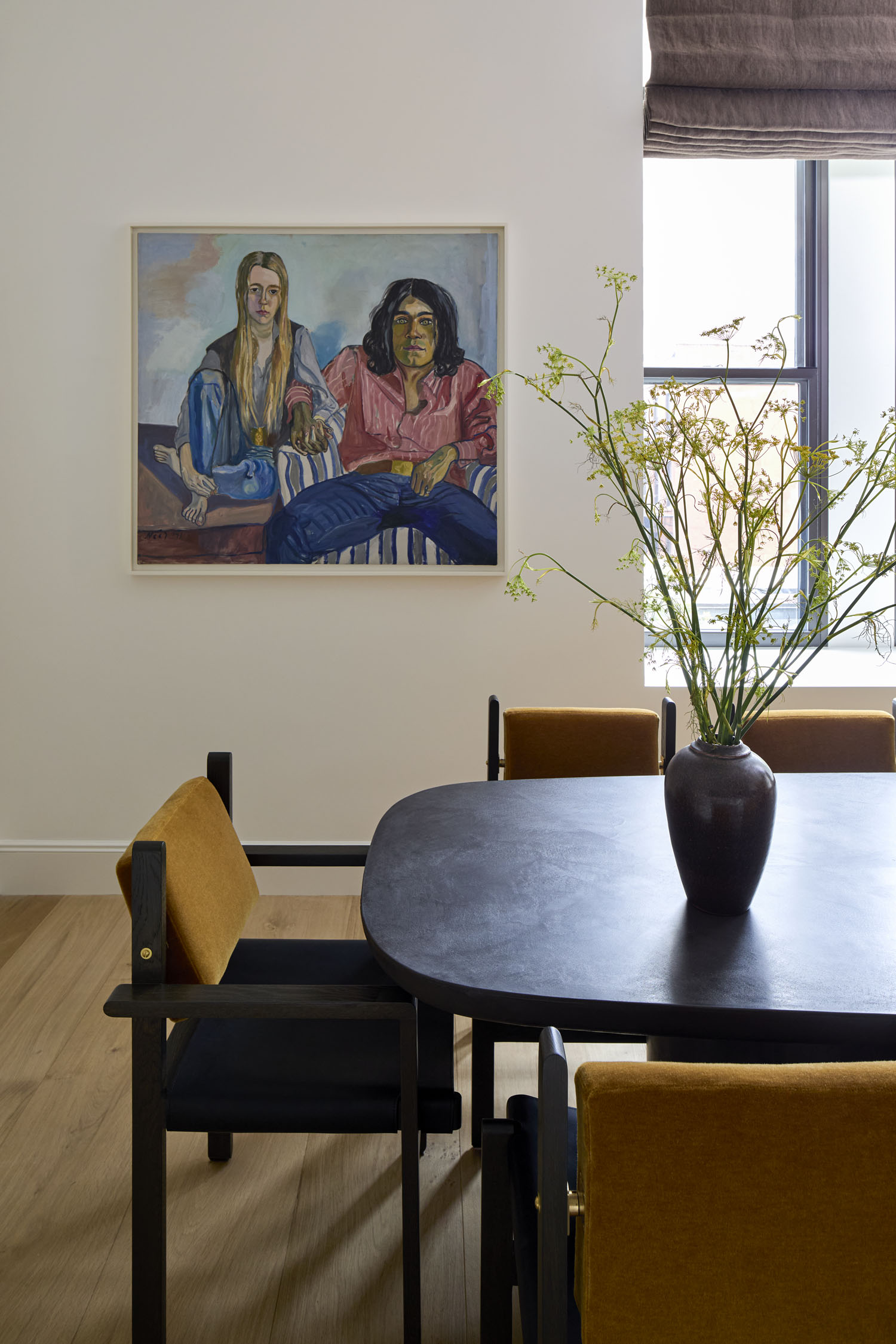
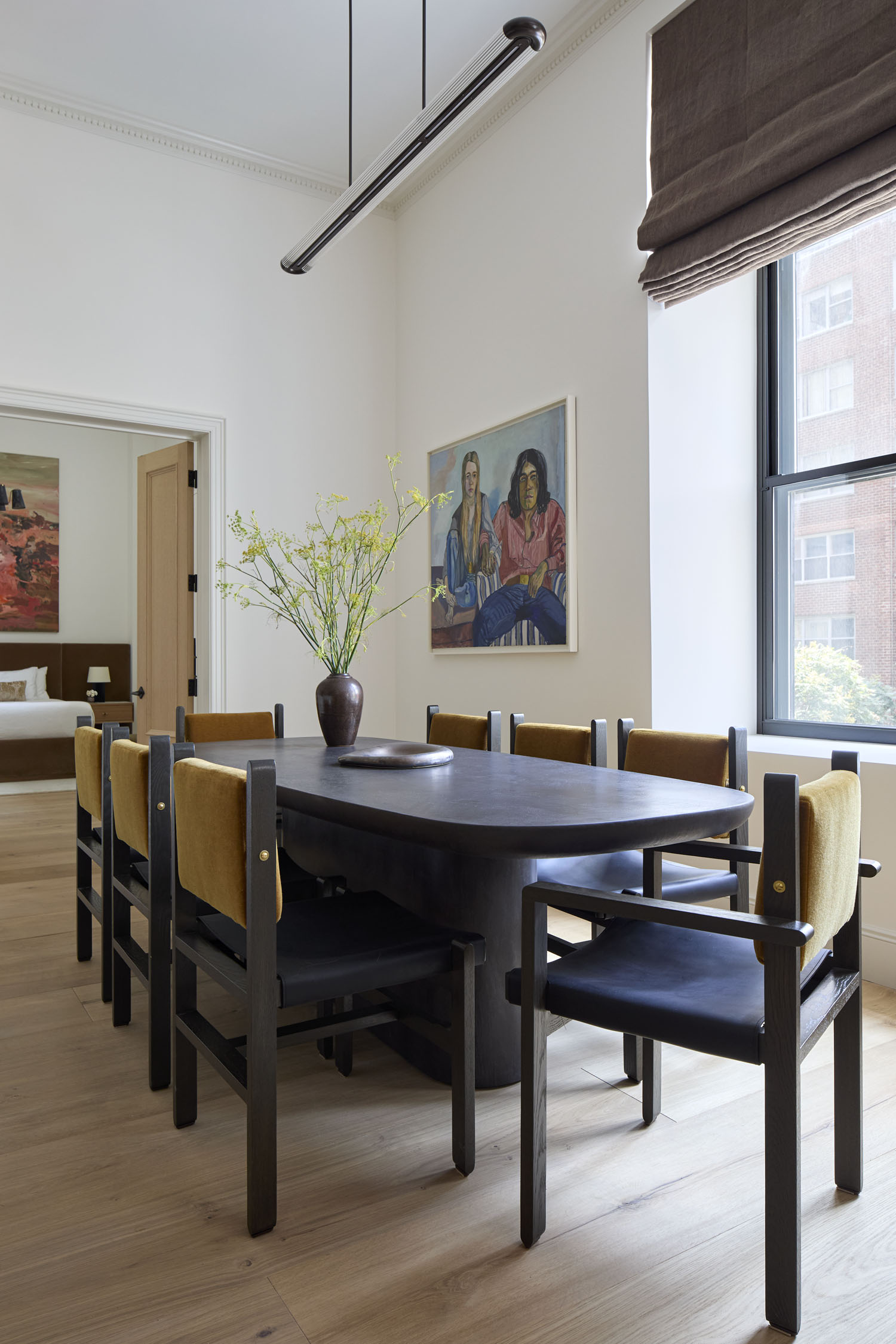
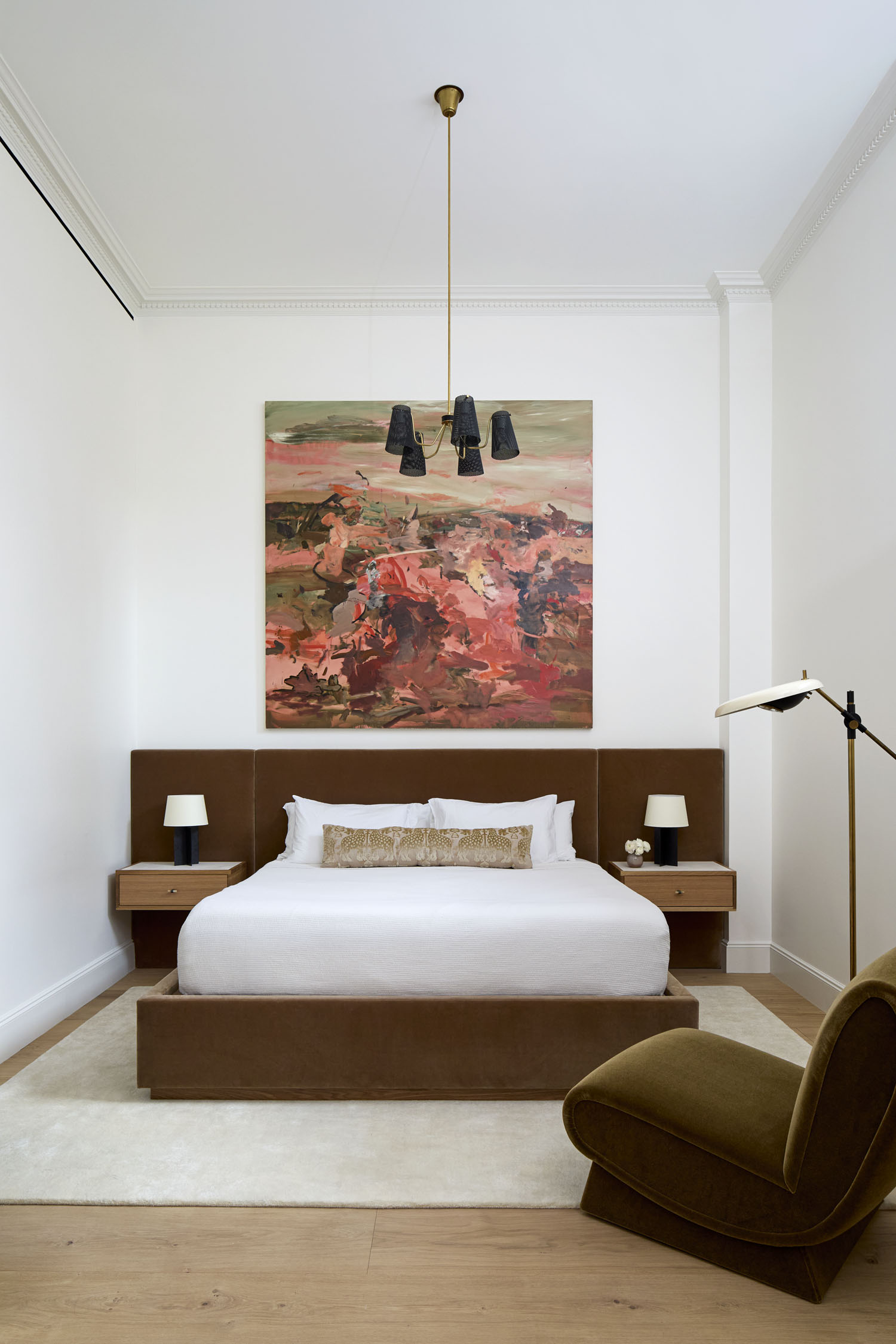
She ultimately selected two abstract Cecily Browns, two monumental Elizabeth Peyton paintings, an Alice Neel portrait, a Kehinde Wiley painting, and other deeply personal works that carry decades of family history. “These pieces have new life in a completely different setting,” she says of the collection now. “It’s really sentimental for me to be living with these pieces that remind me so much of my mom and dad.”
That emotional connection became the guiding principle for the interiors. “When you’re dealing with a collection that’s been so lovingly collected over time, we really toned down the rest of the finishes,” Nate says. “We didn’t need to do anything funny to bring in color or pattern, because we knew the paintings and the photography were going to do that.”
Walls were intentionally reserved for future installations. Millwork remained restrained. A carefully calibrated palette of whites—Cassie jokingly calls the paint selection process “50 shades of white”—allows stone, bronze, and plenty of “moments” to support the artwork at center stage.
During the 11-month renovation, Cassie and Paul lived in a bare-walled rental, the first time in her life she’d experienced an absence of art. “When we moved back in and hung the art,” she says, “I was like, ‘Oh my god. It feels like I have family back.’”
For Nate, the project ultimately captures what makes New York living so compelling. “It’s an urban paradox,” he says. “You thrive on the creativity and the energy of the city, but then you need the option of landing in your own environment that you’ve created, that you’ve edited, that you’ve chosen.”
Cassie and Paul’s apartment, 23 years and one gut renovation in the making, is exactly that—a door they close each night on the city they love, and open onto the family history hanging, quite literally, on every wall.