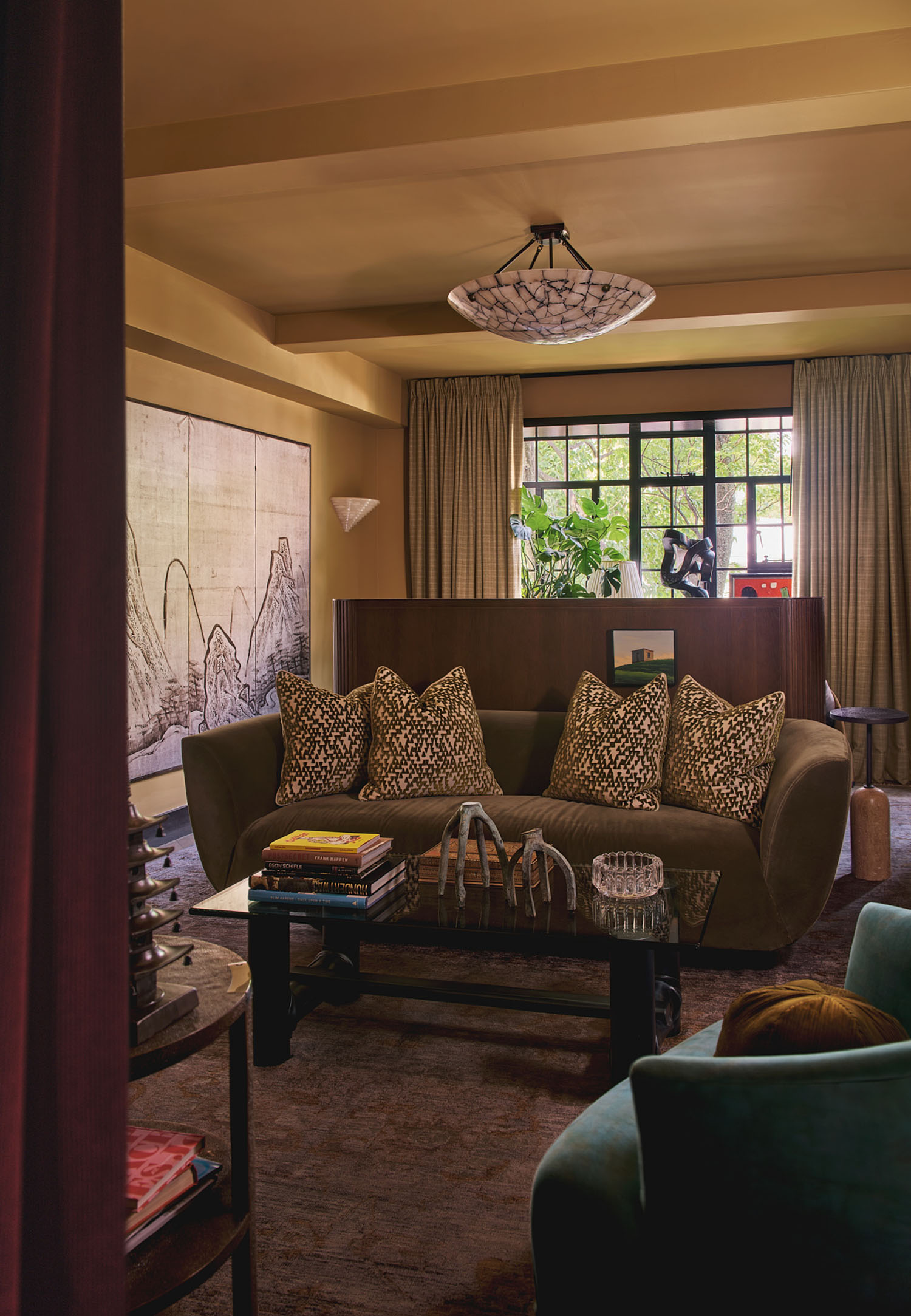
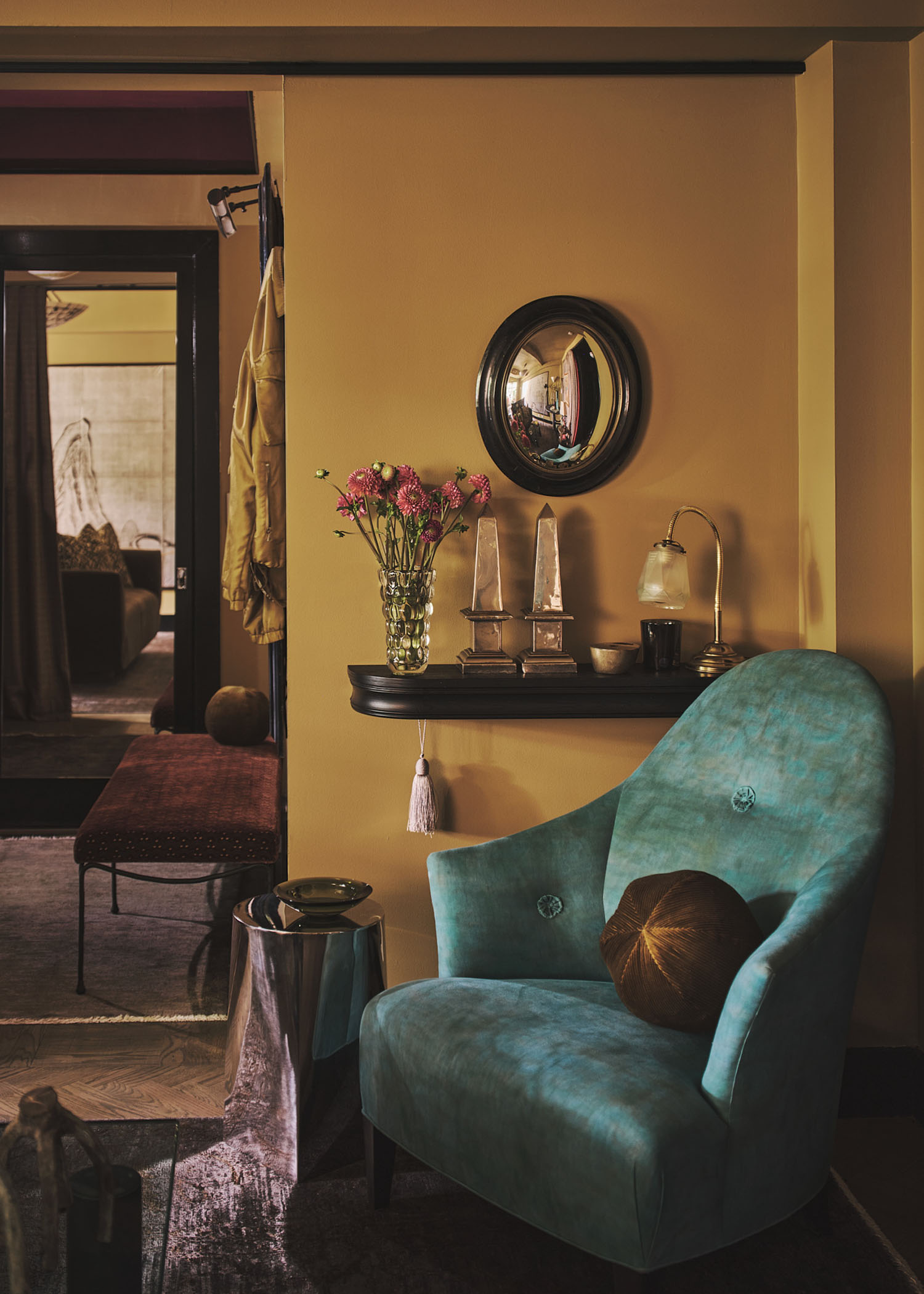
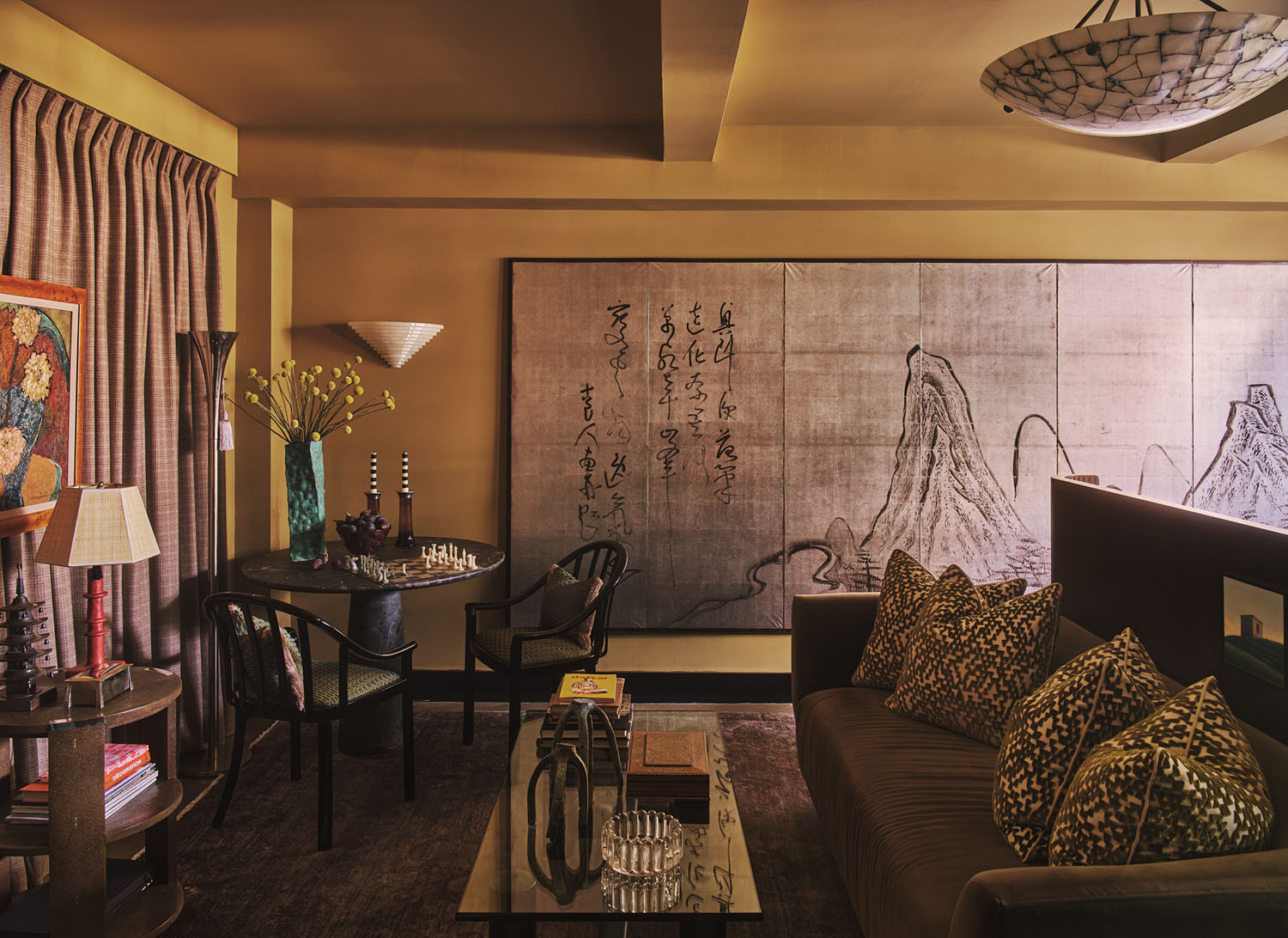
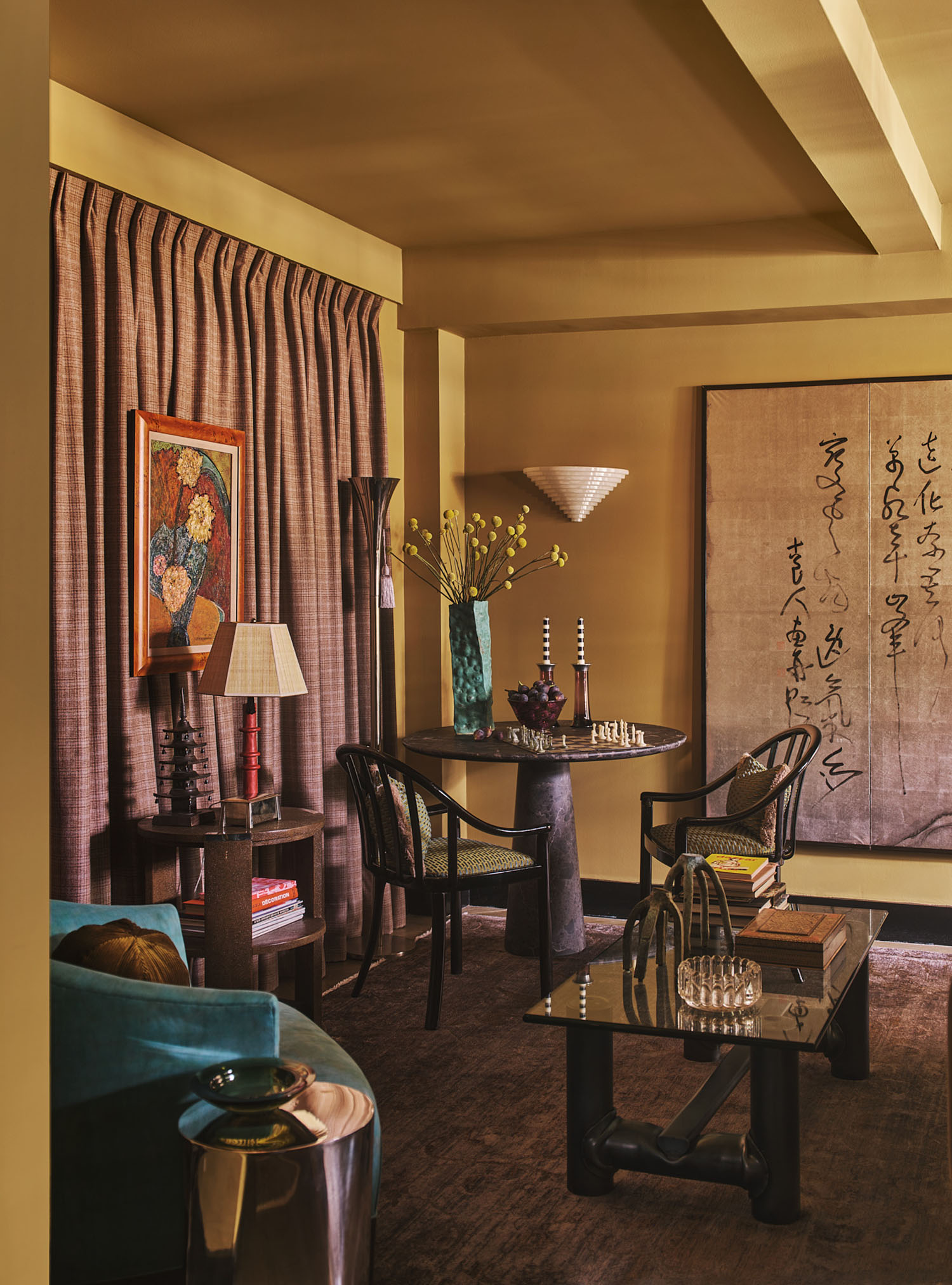
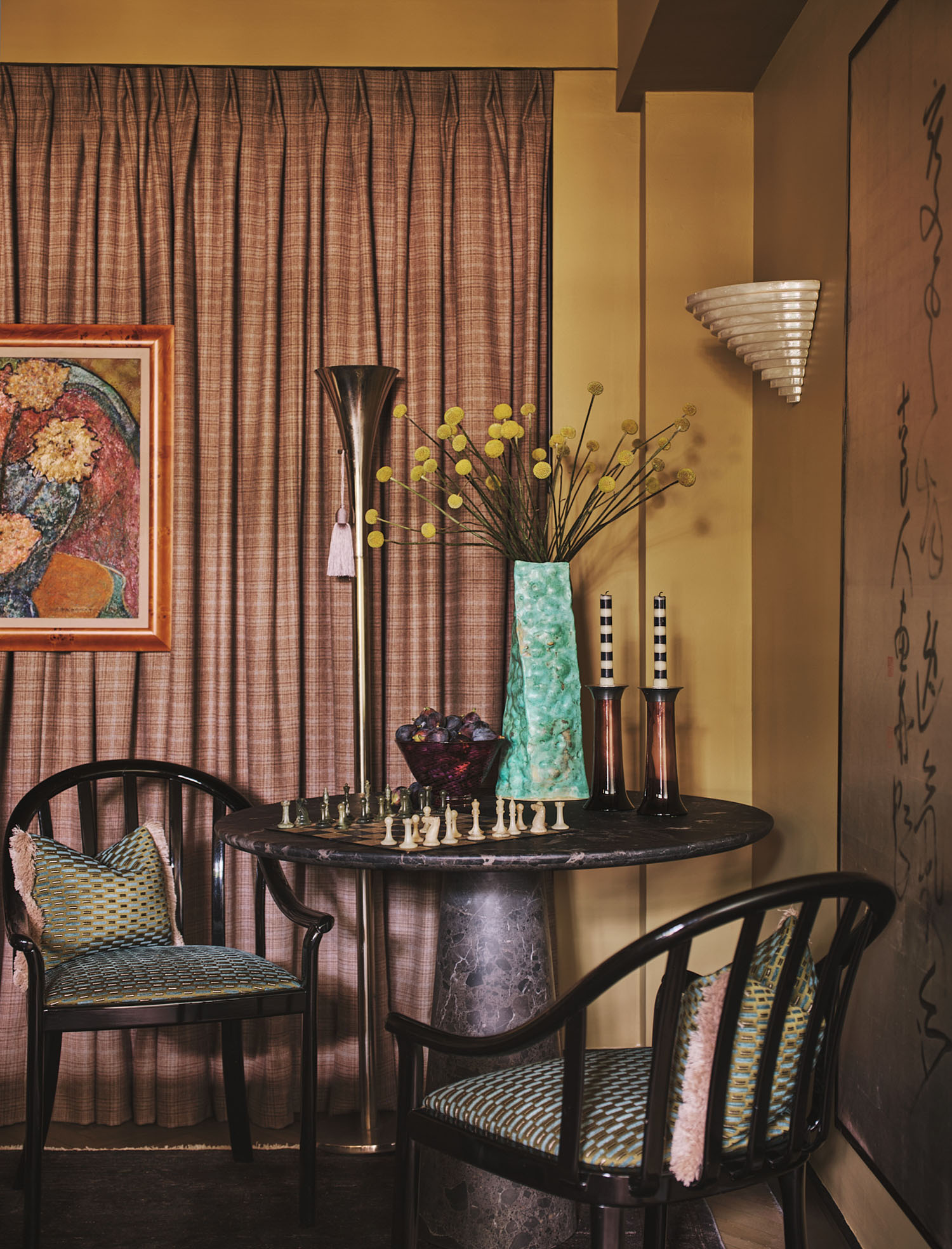
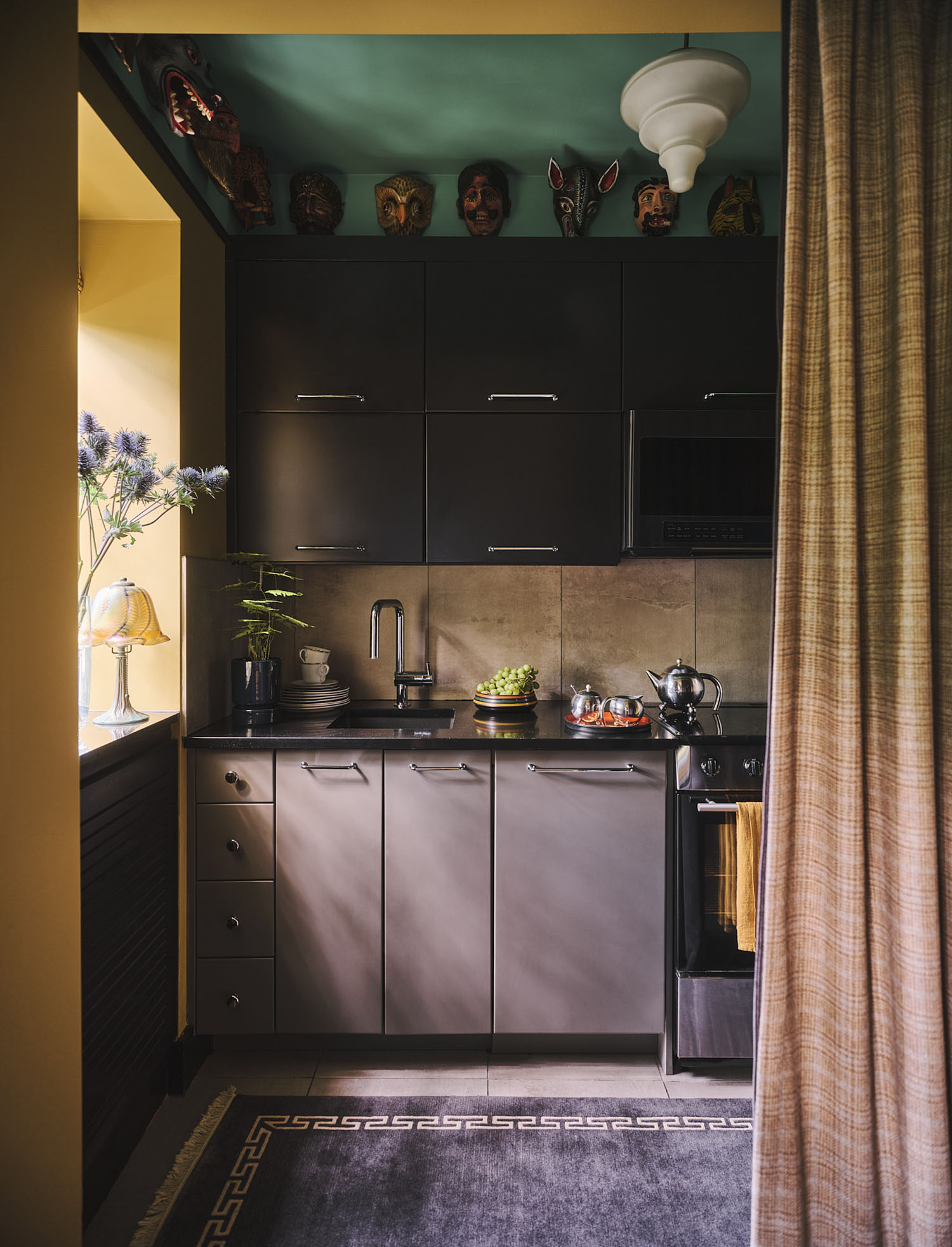
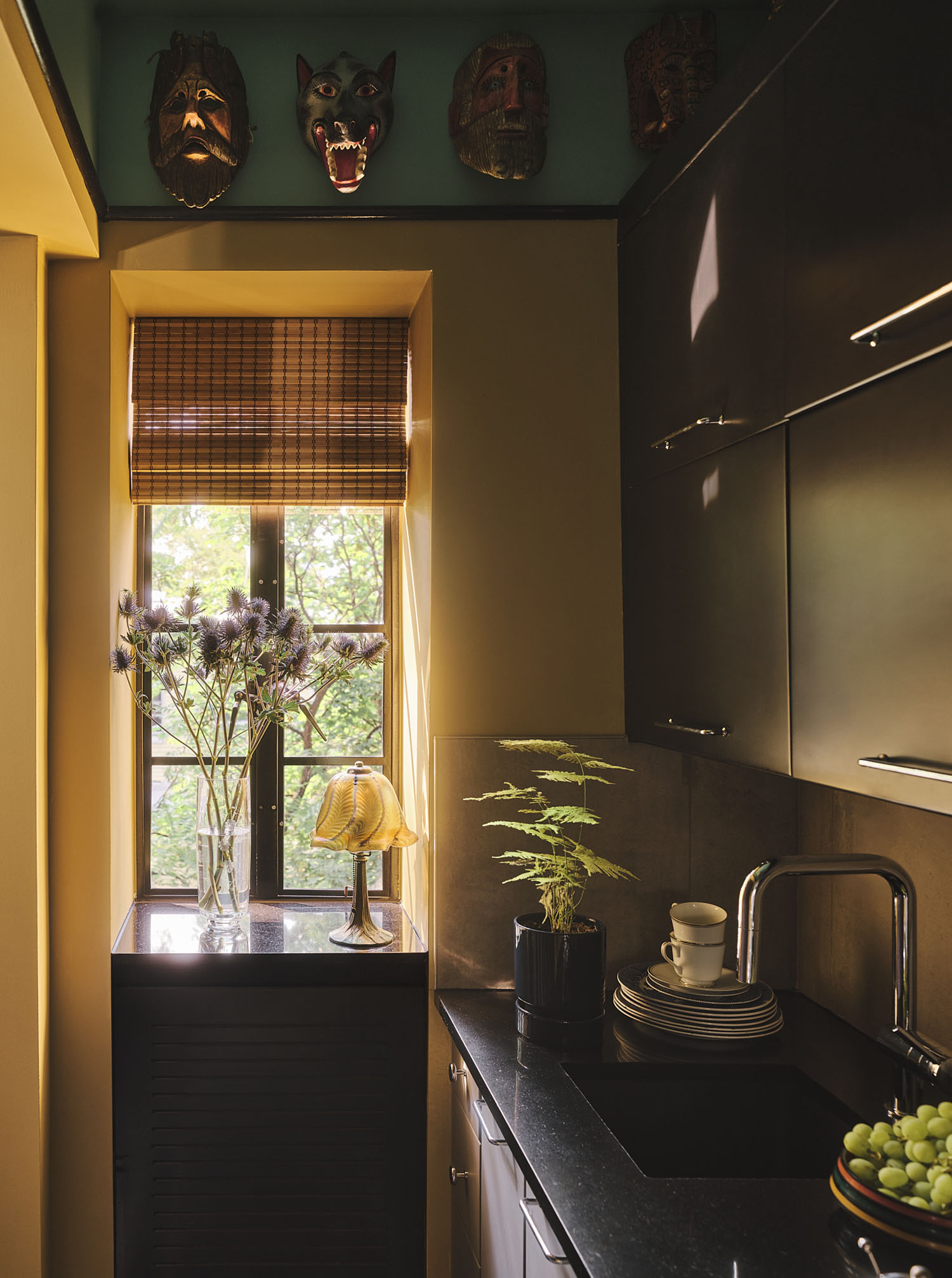
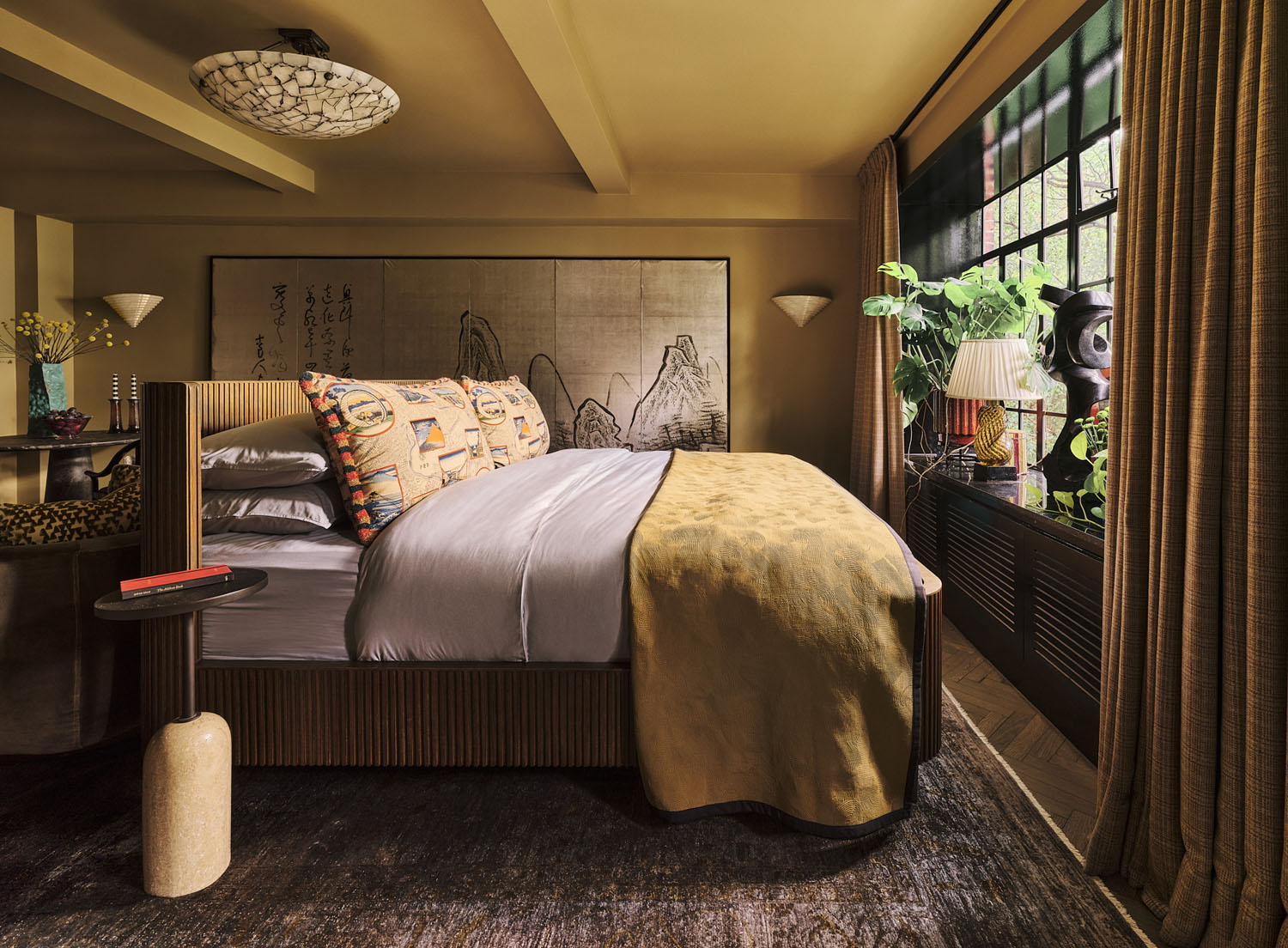
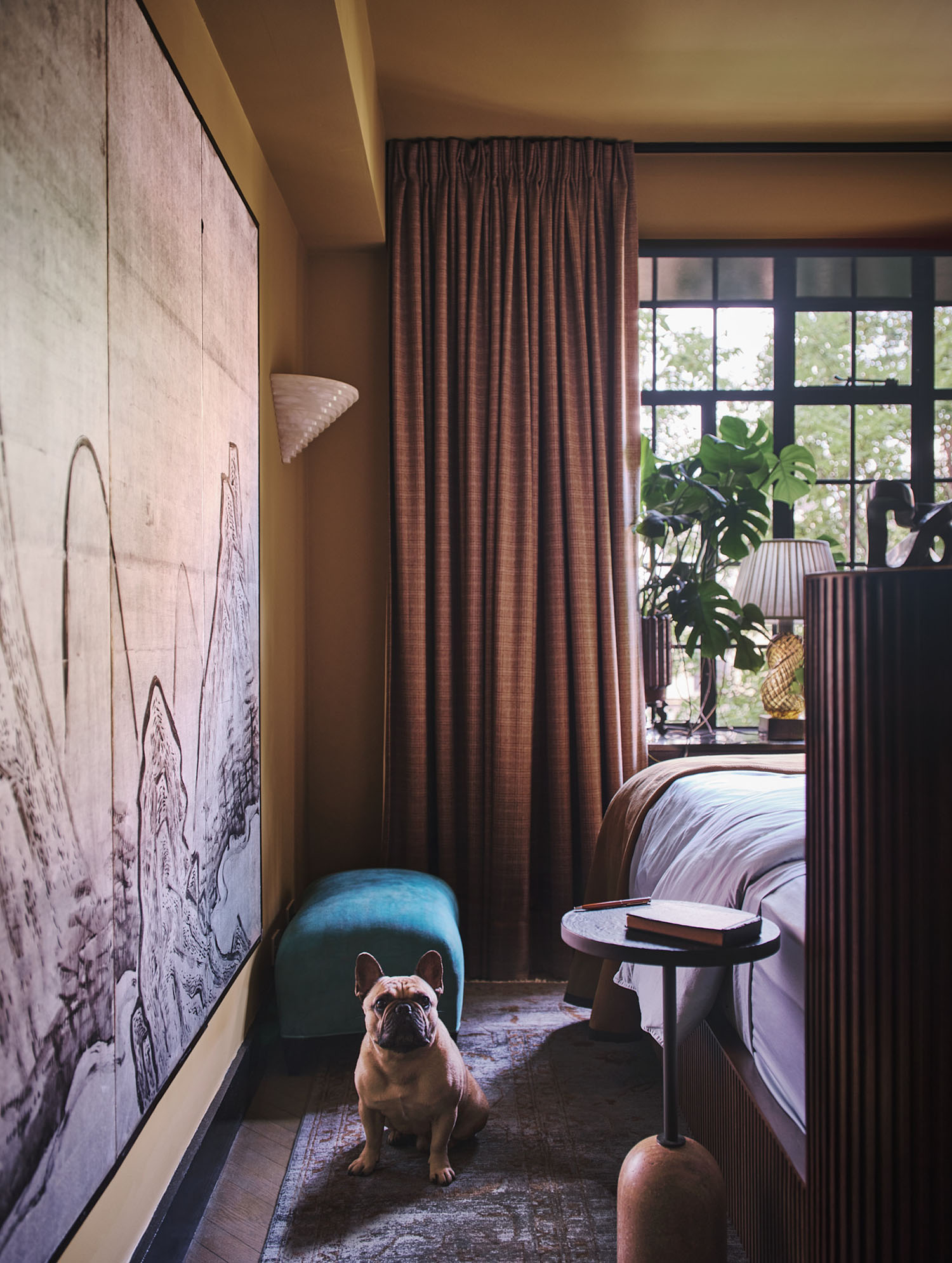
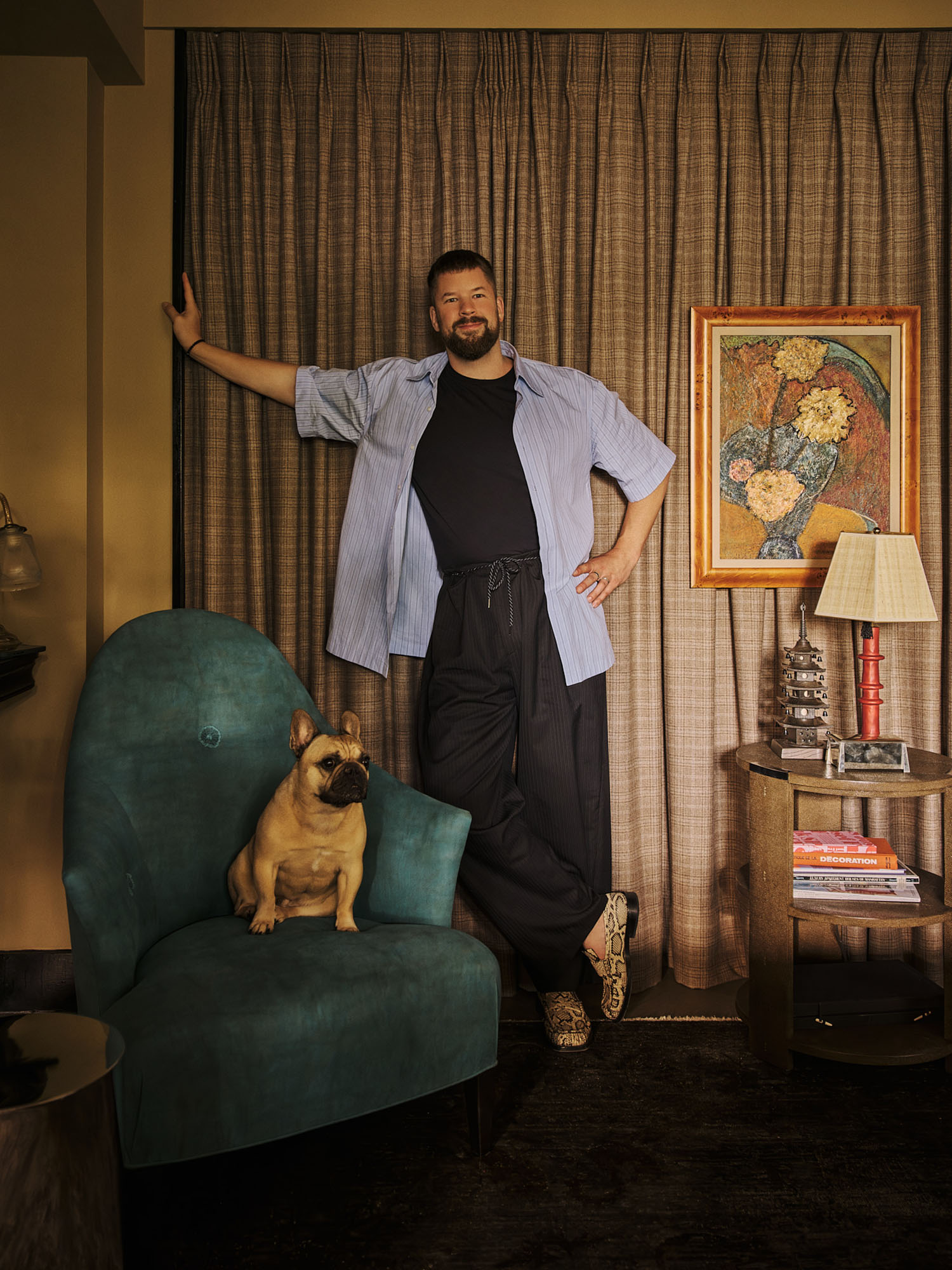

When Canadian designer Luke Havekes began searching for a pied-à-terre in New York City, he found himself drawn to Brooklyn Heights. “To me this area is like the Brooklyn dream,” he says. “The quintessential Brooklyn edge with a cozy neighborhood feel. There is also a mix of cool shops and restaurants and you’re literally one or two stops from the best of the city in Manhattan. The huge trees and preserved architecture make the neighborhood an aesthete candy store!”
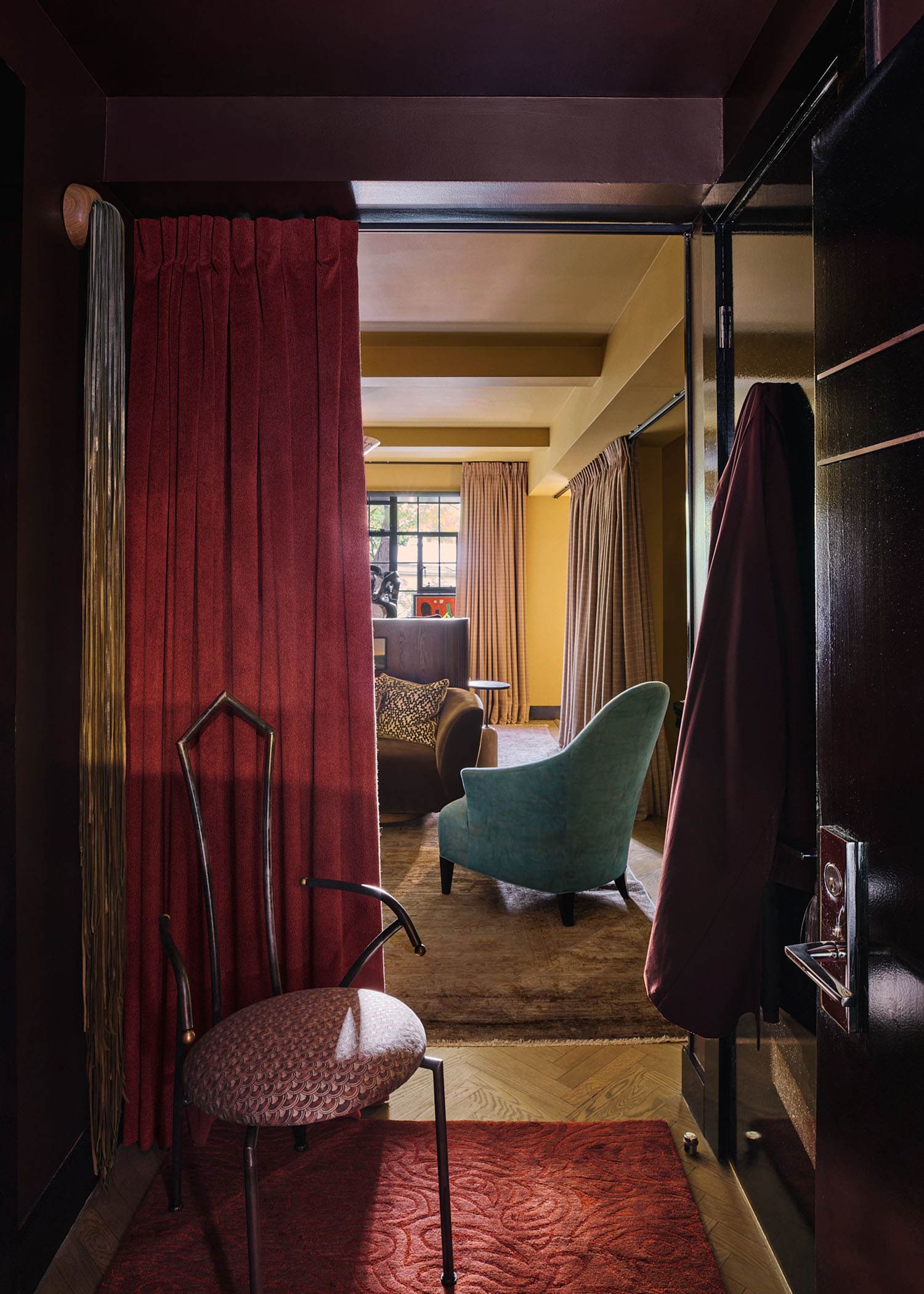
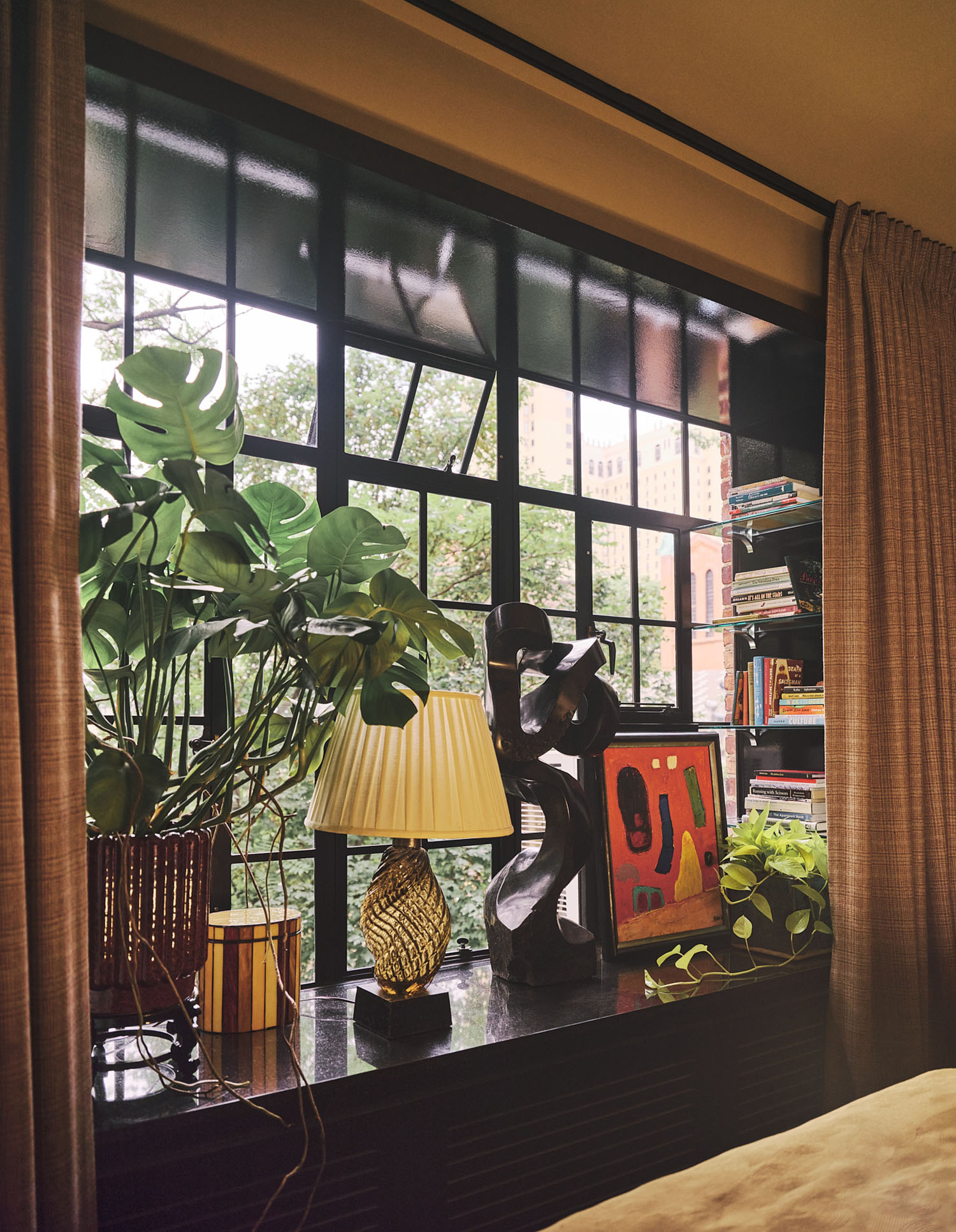
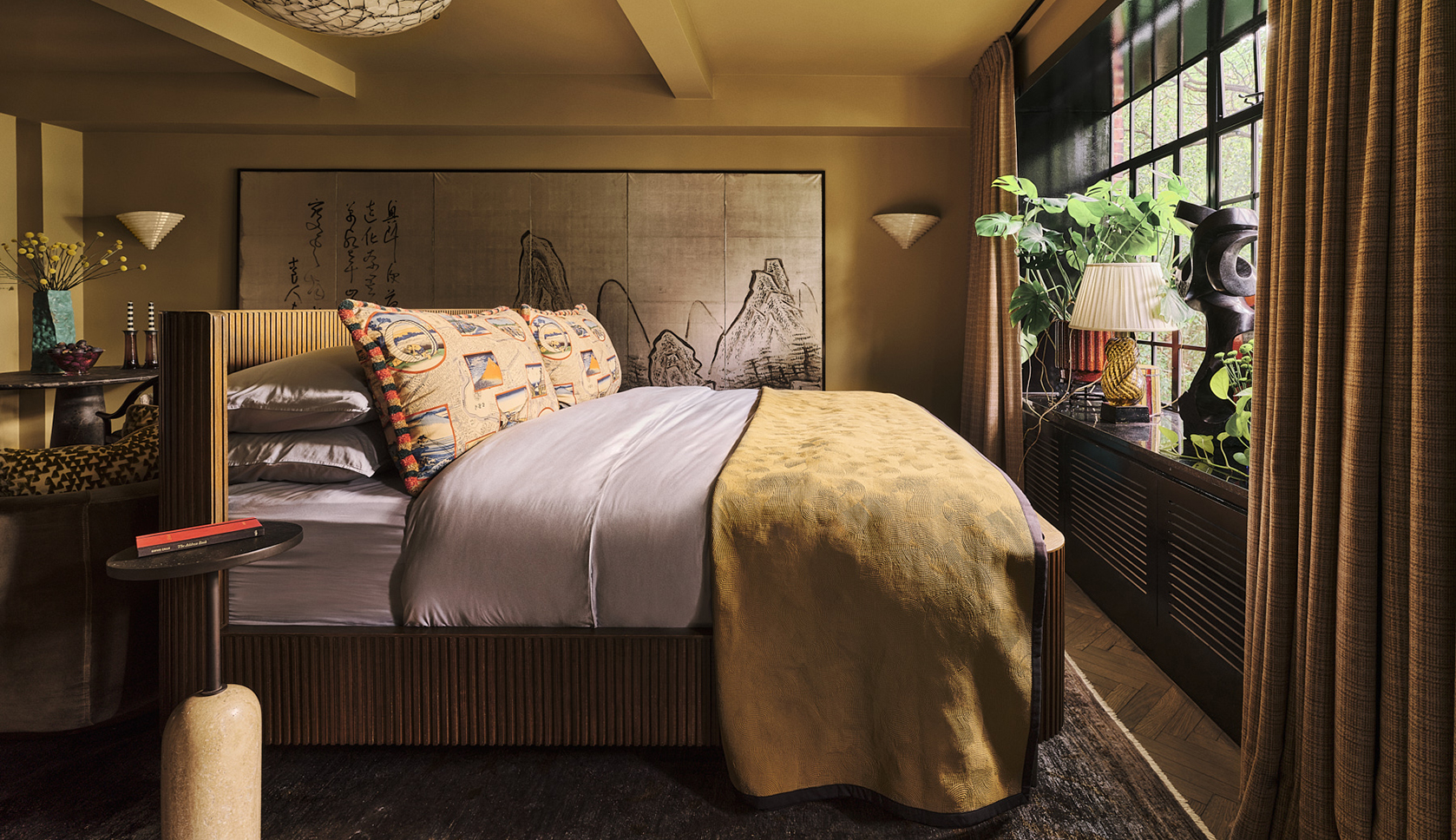
It was only the second apartment he toured, but he knew immediately that he’d found “the one.” “The bones were amazing,” Luke recalls. “Herringbone oak floors, metal casement windows, and beamed ceilings!”
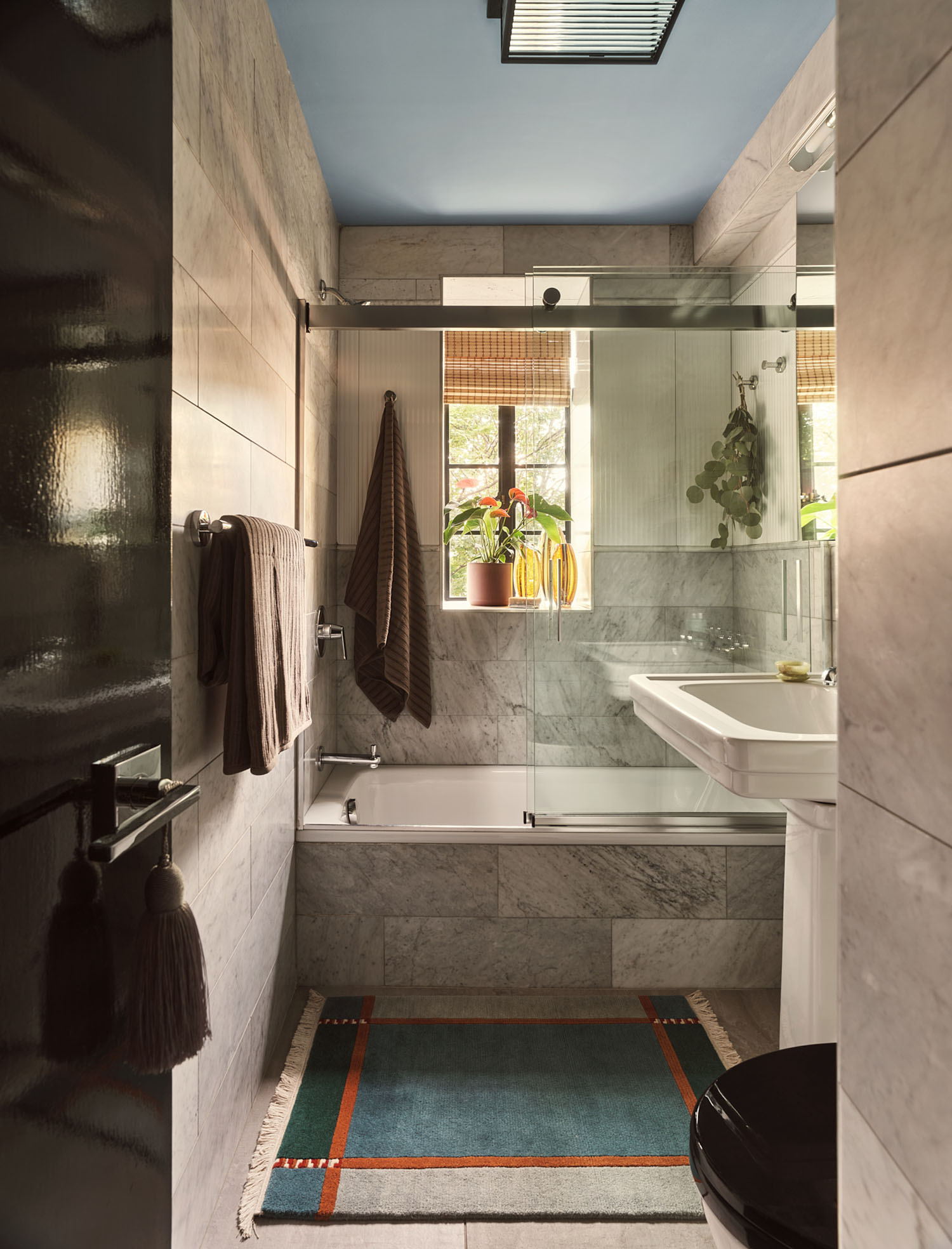
The apartment also had plenty of practical appeal. He notes that the bathroom was in good shape, with real marble and an iron tub. The small kitchen was well proportioned and equipped with granite countertops and dramatic black upper cabinets. “And the rest of the space had symmetry, scale and nice architectural features,” he says. “It was the perfect stage for alterations and embellishments but absolutely not in need of a full-on renovation.”
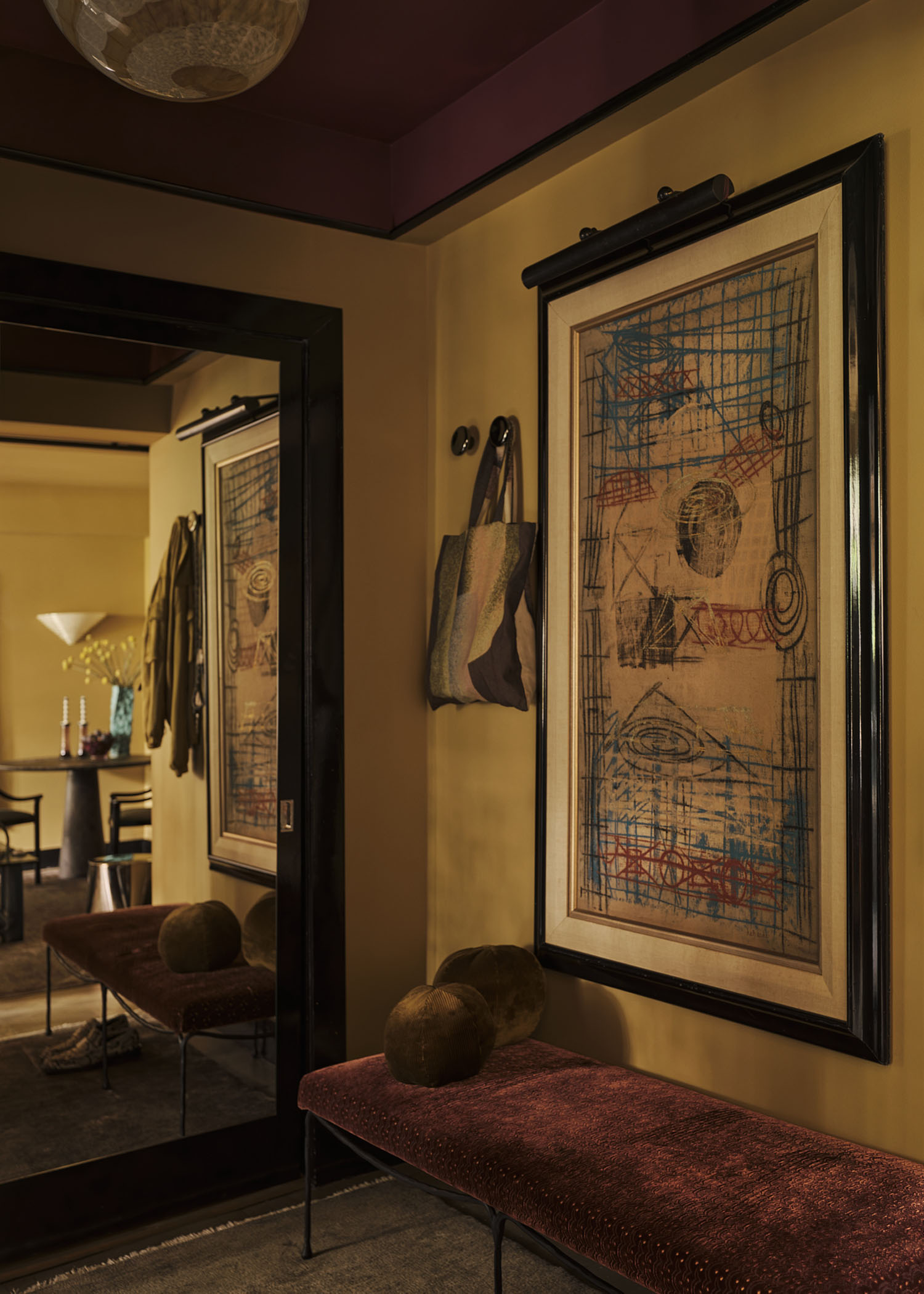
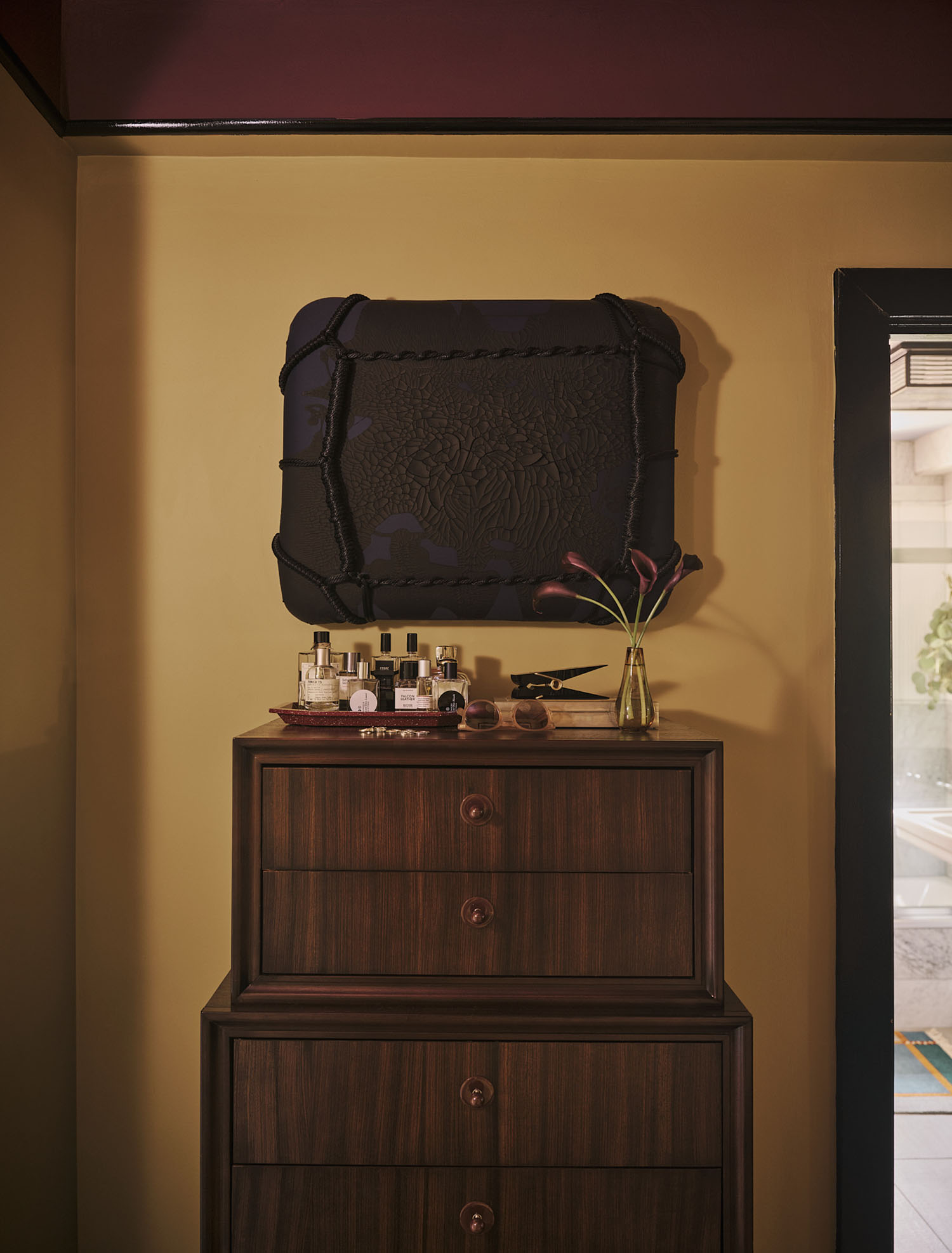
Upon signing the lease, Luke negotiated with the landlord to have the apartment painted before moving in. “I chose to color-drench with a soft mustard from Farrow & Ball called Duster,” he tells us. “All the other main layers followed suit and quickly set the stage and created the overall vibe.”
Today, the apartment has the character of a home that has evolved over years rather than months. “It looks like it has been there far longer than it actually has,” the designer says. “The style is enveloping and when you’re inside, you feel comfortable and anchored—a feeling and space that is very welcome after experiencing all the excitement and energy of New York City.”
Rather than embracing the light, airy aesthetic often associated with small spaces, Luke leaned into a moodier palette. “It swallows the light and creates shadows,” Luke reflects. “It’s the kind of space that feels mysterious and shadowy even when the light is pouring in the windows. I didn’t want light and airy. I wanted depth and richness. I think it really achieves that.”
In a small space, the designer says that absolutely every piece counts. “Without obsessing (too much) I cycled through many options for some pieces before getting to exactly the right ones,” he recalls. “You only need one or two of each item so there isn’t much room for variety, and a small space is totally the kind of project where you shouldn’t feel bad about a splurge. You’re going to look at every item and notice it a lot! Sometimes I had to kick myself and say just do it and, in those cases, the spend was definitely worth it!”
See more in the slideshow.