The history of this Los Angeles home has a hint of old Hollywood charm. “It’s in the Larchmont Village neighborhood, in a bungalow originally built as housing for the Paramount lot,” designer Raychel Wade says. “What we love most about the area is that it has held onto its character in a way that feels increasingly rare.”
“In a world where so many neighborhoods have been flipped, updated, and flattened into the same beige version of themselves, this pocket of LA has maintained its charm and architecture,” she continues. “There are still tree-lined streets, a real sense of neighborhood, and so many of the original details remain intact. It feels genuinely residential and warm, tucked right into the middle of the city.”
Her client is a screenwriter with an equally cinematic vision for her first home. In her own words, she describes her taste as “someone from the folk music community in the 1960s time traveled to live between the Hamptons and a Nancy Meyers film set.” She told Raychel she wanted the home to feel lived in, layered, and eclectic—“never too precious, with a beachy sensibility that still felt rooted in Los Angeles and layered with her East Coast roots,” Raychel notes.
“As soon as I heard her point of view, it all came together quickly,” the designer explains. Her scope was to furnish every room in the home, along with some of the outdoor spaces, while incorporating the homeowner’s existing art collection and personal belongings. Above all, the goal was to help the first home her client had purchased feel distinctly her own.
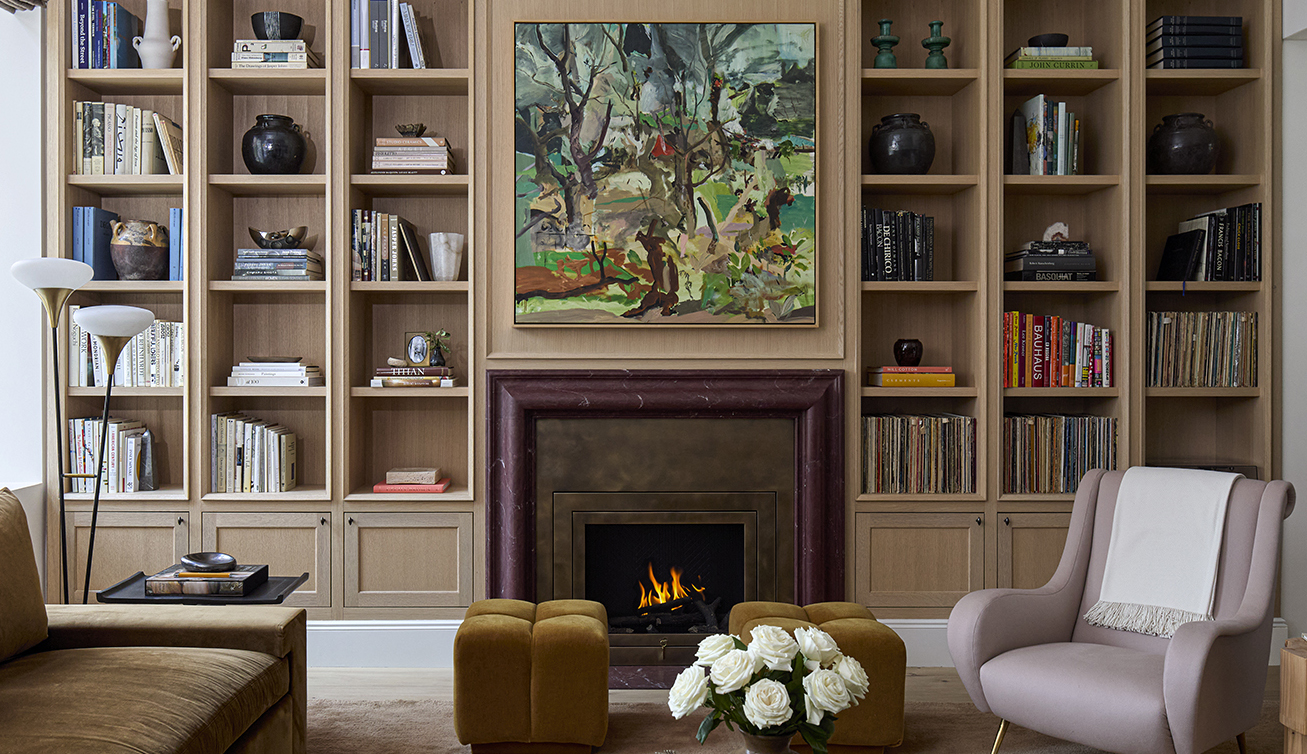
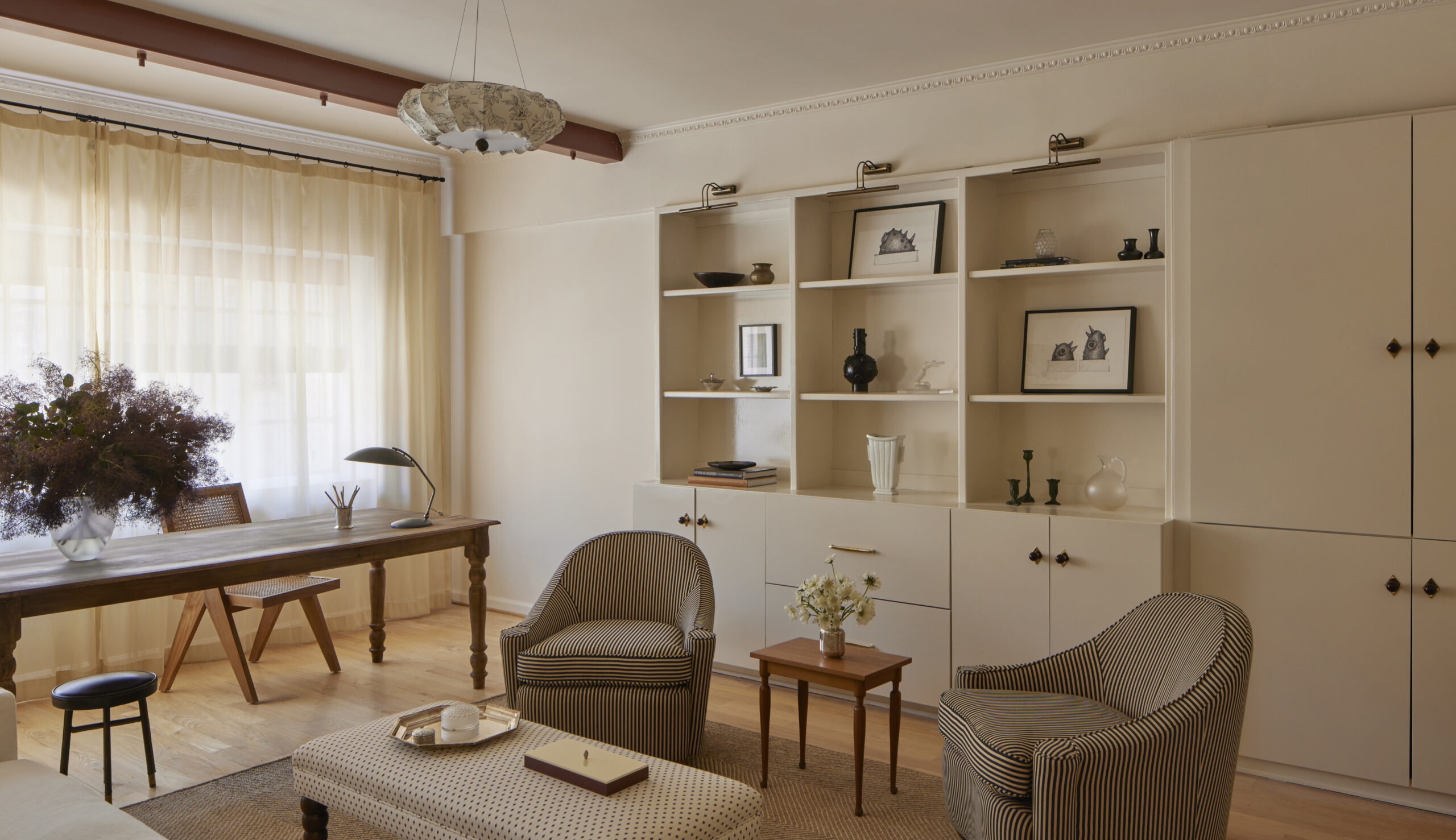
One of Raychel’s signatures proved especially well suited to the bungalow: what her team affectionately calls the “Conversation Corner.” “It’s a room with no TV that’s placed just for the adults to relax and have a glass of wine,” she explains. “Because this is a bungalow, the room itself is fairly small, so we sourced two chairs from Nickey Kehoe upholstered in a Michael Smith fabric, which gave the space some breathing room.”
They added wallpaper, hung soft sheer linen drapery, and brought in a navy sofa with contrasting piping to lend the rooma youthful energy. “We were careful not to compromise any of the original detailing,” she clarifies. “The fireplace, shelving, and original windows all stayed exactly as they were, and we layered in pattern with vintage side tables for a bit of funk.”
In the dining room, they repurposed the homeowner’s existing table, then refreshed the space with a vintage rattan pendant, a pair of flower-shaped orbital surface mounts from Urban Electric, and new dining chairs.
The guest bedroom leans playful, with a rattan parrot floor lamp, plenty of pattern, warm striped drapery layered over soft sheer linen, and a graphic checkered rug from Salam Hello, while the walls remain neutral. “The rest of the house feels brighter and busier, so this room offers a nice contrast,” Raychel explains. “It’s a quieter, moodier place to retreat to.”
For Raychel, though, the primary bedroom is the pièce de résistance. “This space was an addition to the house, built by architect Rudin Donner Design, Inc., before we came on board, and we were brought in to bring the space to life,” she tells us. “We had custom nightstands from James Showroom made with playful little hoofed feet, and we love how the room’s ikat striped wallpaper and matching Roman shade play against the rich floral fabric on the bed. But the real magic of this room is how it opens up. Giant sliding doors lead directly out to a landscaped backyard designed by Allison Massey Landscape Design, shaded by towering pepper trees. It creates that effortless indoor-outdoor living that feels so aspirational and so quintessentially LA.”
It’s also the kind of project that satisfies Raychel’s own creative instincts. “We wanted the house to feel collected and lived in, never overly decorated,” she reflects. “Her personal belongings sit right alongside the pattern, texture, and vintage pieces we brought in. Every room has its own distinct palette and personality, but the house still feels completely cohesive. You can’t quite tell what’s old and what’s new, what was already hers and what we found for her, which is exactly what we wanted.”